
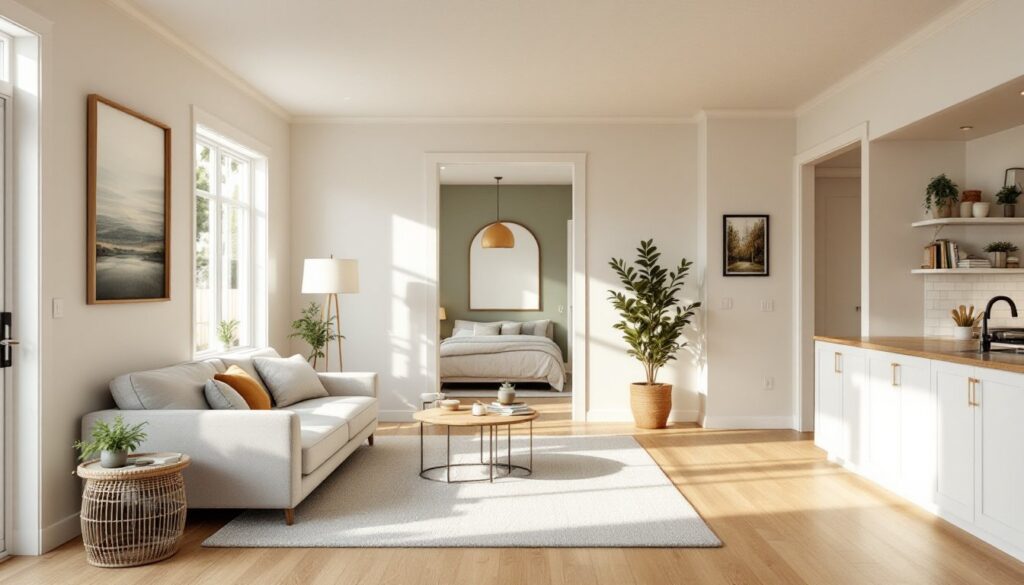
Ranch houses bring timeless appeal, clean lines, open sightlines, and practical layouts have defined American residential design for decades. But, many homeowners wrestle with the inherent constraint: compact rooms and limited square footage. The good news? Small ranch house interior design doesn’t mean sacrificing style or comfort. Smart strategies around layout, color, storage, and lighting can transform a modest footprint into a space that feels generous, inviting, and genuinely livable. This guide walks through proven tactics that designers and DIY enthusiasts use to stretch perception and function in ranch interiors.
Key Takeaways
- Small ranch house interior design thrives on open floor plans—removing non-load-bearing walls or enlarging doorways creates psychological breadth and unobstructed visual flow.
- Light, neutral color palettes and consistent trim-to-wall painting are free, high-impact tools that make compact rooms feel airier and more spacious.
- Multi-functional furniture with exposed legs and appropriately scaled pieces prevent small spaces from feeling cramped while maximizing usability.
- Layered lighting combining ambient, task, and accent sources—plus strategically placed mirrors—brightens rooms and dramatically improves perceived space.
- Continuous, wide-plank flooring in light to medium tones visually expands rooms and unifies the entire footprint more effectively than patchwork rugs or narrow boards.
- Built-in shelving, hidden storage solutions, and custom closet organizers eliminate clutter, which reads twice as loudly in small ranch homes.
Open Floor Plans: Breaking Down Barriers for Flow and Light
The biggest visual and functional gain in a small ranch comes from removing non-load-bearing walls or opening sight lines between rooms. Before touching a wall, consult a structural engineer or contractor, determining whether a wall is load-bearing is non-negotiable. If it’s safe to remove, you’ve instantly expanded the perceived footprint.
Removing a wall between the kitchen and living area, a common ranch layout, creates a unified social space and lets natural light travel deeper into the home. A half-wall or bar-height counter can replace a full partition, preserving some visual separation while maintaining openness.
If full removal isn’t an option (load-bearing wall, permits, or budget), enlarge doorways or install a sliding barn door or pocket door instead of a swing door. These eat up less swing space and maintain sightlines. The goal is unobstructed visual flow. When someone enters, they should see as far as possible into the space, that psychological breadth matters more than actual square footage.
Color Palettes That Expand Perceived Space
Color is a free tool and one of the most underutilized. Light, warm neutrals, soft whites, warm grays, and pale beige, reflect light and make walls recede visually. A room painted in crisp white or warm off-white simply feels airier than the same room in deep charcoal.
Beyond the base palette, consistency pays. Painting trim, doors, and walls the same or similar value (lightness/darkness level) erases visual interruptions. When everything blends, the eye isn’t constantly stopping and starting: the space reads as one continuous plane.
Neutral Foundations and Strategic Accents
Start with a neutral foundation, whites, greiges (gray-beige blends), or warm taupes on walls and trim. These are safe, timeless, and let natural and artificial light show their best. A gallon of quality interior paint covers roughly 350–400 square feet, so budget two coats for good coverage and durability.
Then layer personality through accents: a single painted accent wall, colorful artwork, textiles, or a bold front door. This approach avoids overwhelming a compact footprint while keeping the design personal. A teal or sage accent wall in a bedroom or home office feels curated, not chaotic. Keep accent colors muted and slightly desaturated for a 2026 vibe, pure brights read as dated faster.
Multi-Functional Furniture and Smart Storage Solutions
In a small ranch, furniture must earn its space. A sofa that’s also a sleeper, a coffee table with hidden storage, or a desk that doubles as a console table immediately gains function. When shopping, prioritize pieces with legs (vs. fully skirted bases), exposed legs create visual lightness and airflow, making the room feel less cramped.
Scale matters too. Oversized sectionals and bulky dressers overwhelm compact rooms. Choose appropriately sized seating and storage. A loveseat or apartment-scale sofa (72–78 inches) often works better than a full sectional in a living room under 200 square feet.
Built-Ins and Hidden Storage for Clutter Control
Built-in shelving, window seats, or under-stair storage transform wasted space into organized storage. If you’re comfortable with basic carpentry, wall-to-wall shelving around a bedroom or living room is achievable with 2×12 lumber, L-brackets, and a stud finder. Locate studs (typically 16 inches apart), use heavy-duty anchors if you can’t hit studs, and ensure shelves support typical loads (books, décor), don’t assume they’re structural.
Custom closet organizers (shelves, rods, drawers) cost $500–$2,000 installed but reclaim enormous functionality. Even a simple wire shelving system or slim dresser tucked into a closet maximizes vertical storage. Kitchen islands with drawers and open shelves provide both prep space and hidden storage, a dual-purpose win in a galley kitchen.
The rule: every piece should either serve a purpose or spark joy. In a small space, clutter reads twice as loud.
Lighting Design to Brighten Compact Rooms
Poor lighting makes small spaces feel even smaller and more cramped. Layer three types of light: ambient (general), task (focused), and accent (decorative). Don’t rely on a single overhead fixture, it creates harsh shadows and uneven illumination.
Ambient light from ceiling fixtures, recessed lighting, or LED panels provides base brightness. A 1,200–1,500-lumen ceiling fixture suits a 100–150 square foot room: check package specs. Task lighting, a reading lamp, under-cabinet kitchen lights, or desk lamp, focuses light where you need it. Accent lighting (wall sconces, table lamps) adds layers and visual warmth.
LED bulbs (measured in color temperature: 2700K for warm, 4000K for neutral) are mandatory, they’re efficient, durable, and come in dimmable options. Warm white (2700K) feels cozy: neutral (4000K) suits task areas. Install dimmers wherever possible: dimmed light expands mood flexibility and perceived space.
Mirrors amplify light by reflecting it deeper into rooms. A large mirror opposite a window bounces natural light around: even an interior wall mirror opposite a lamp multiplies effective illumination. This is one of the cheapest, most impactful moves a homeowner can make.
Flooring Choices That Tie Everything Together
Continuous flooring visually expands a space. Hard flooring (wood, laminate, vinyl planks, or tile) reads as more spacious than a patchwork of area rugs, though rugs add comfort and define zones. If mixing materials, say, tile in the kitchen and wood-look vinyl in the living area, choose compatible colors and finishes to maintain flow.
Wide-plank flooring (6–12 inches) makes spaces feel larger than narrow planks: fewer seams = fewer visual breaks. Light to medium tones (pale oak, whitewashed, light gray) are practical and expansive: very dark floors show dust and feel heavier visually. Avoid highly textured finishes in small rooms, they compete for visual attention.
For a ranch with original narrow-strip hardwood, refinishing and sealing with a matte or satin polyurethane refreshes the space without replacing it. That said, modern luxury vinyl planks (LVP) are durable, moisture-resistant, affordable ($1.50–$5 per square foot installed), and convincingly wood-look. Concrete with epoxy sealing is a trendy, industrial option that feels spacious and requires minimal décor overhead.
Consistency is the key. A cohesive, uninterrupted floor makes the entire footprint feel generous and intentional.