
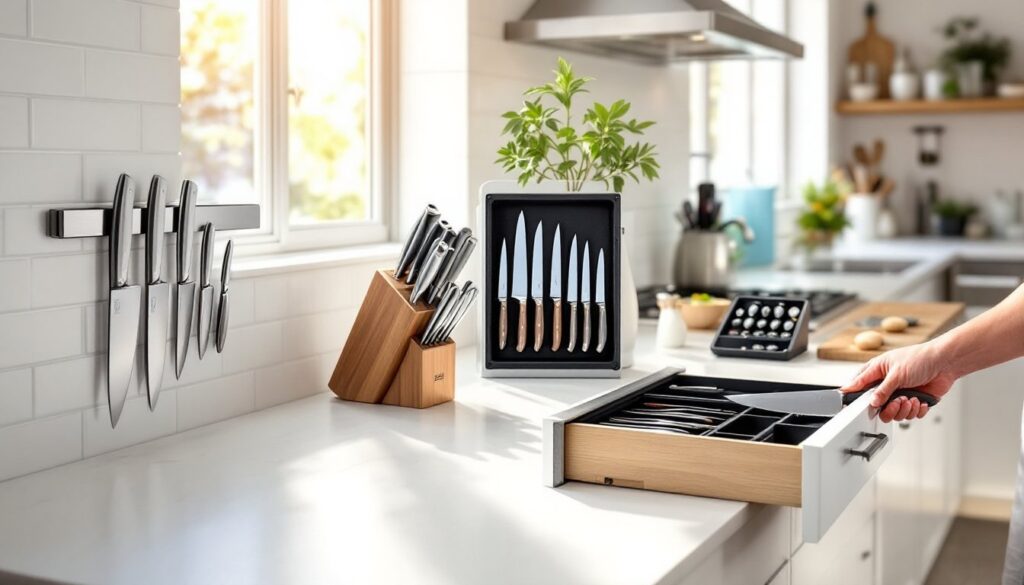
A knife drawer that looks like a junk drawer isn’t just disorganized, it’s dangerous. Loose blades can chip or dull against other utensils, and fumbling around for the right knife is a recipe for cuts and frustration. Proper knife storage protects both the tools and the cook. Whether someone’s working with a modest three-piece set or a full arsenal of specialized blades, the right storage solution keeps knives sharp, accessible, and safe. This guide walks through five practical knife storage options, from magnetic strips to drawer organizers, so homeowners can choose what fits their kitchen layout, budget, and cooking habits.
Key Takeaways
- Proper knife storage solutions prevent blade damage, protect against kitchen injuries, and extend the lifespan of expensive knives by keeping them sharp and safely separated.
- Magnetic strips are space-efficient wall-mounted knife storage options ideal for small kitchens, offering easy blade visibility and access within 12–18 inches above counters, though not all knives with bolsters stick equally well.
- Traditional wooden knife blocks remain the most popular knife storage choice, with quality hardwood blocks costing $40–$120 and requiring proper maintenance like hand-drying to prevent deterioration.
- Drawer organizers with padded slots or silicone blade guards provide hidden, child-safe knife storage for kitchens with limited counter space, though you must verify drawer height and maintain awareness of stored blade locations.
- Specialized knives like serrated bread knives, Japanese blades, and cleavers require tailored knife storage solutions—using separate slots, fabric sleeves, or supplemental organizers to prevent blade damage and ensure proper protection.
- The best knife storage system is one that you’ll actually use consistently; choosing between magnetic strips, blocks, or drawer organizers depends on your kitchen layout, budget, and cooking habits.
Why Proper Knife Storage Matters
Storing knives loose in a drawer is the fastest way to ruin them. Every time a blade bumps another tool, it loses a tiny bit of its edge. Over months, that casual negligence turns a sharp chef’s knife into a dull hacker that requires constant honing and eventual professional sharpening.
Beyond blade maintenance, unsafe storage creates real hazards. Reaching blindly into a drawer full of loose knives is an invitation for a serious cut, something even experienced cooks know to avoid. The Occupational Safety and Health Administration (OSHA) lists improper tool storage as a common cause of kitchen injuries. A deliberate system keeps blades safely separated and visible, so someone knows exactly where each knife is before reaching.
Good storage also extends a knife’s lifespan dramatically. A chef’s knife that costs $80–$200 deserves better than a crowded drawer. With proper organization, these tools stay sharper longer, perform better during prep work, and look professional. The investment in storage pays for itself through reduced blade replacement and fewer trips to the sharpening service.
Magnetic Strips and Wall-Mounted Options
A magnetic knife strip mounted on the wall or side of a cabinet is one of the most space-efficient and visually clean solutions. These strips come in wood, stainless steel, or powder-coated finishes and range from 12 to 24 inches long. They hold most kitchen knives securely and keep blades visible and within arm’s reach.
Installation requires finding wall studs and using appropriate fasteners. For drywall, toggle bolts or heavy-duty anchors rated for at least 15 pounds work well: for a backsplash area, a stud finder ensures solid support. The strip should be mounted 12 to 18 inches above a counter, high enough to keep it out of reach of children but low enough for comfortable access. A level ensures it’s truly horizontal, a tilted strip causes knives to slide or fall.
Magnetic strips work especially well in small kitchens or galley layouts where drawer and counter space is premium. They also make blade conditions easy to assess at a glance. But, they require open wall space, and some cook prefer keeping knives out of sight. Also, knives with bolsters (the thick metal collar where the blade meets the handle) may not stick as strongly. Test the magnet’s holding power before committing to installation: not all knives are equally magnetic.
Angled or rail-mounted knife blocks function similarly but offer a more contained look. These block knives on a small footprint and can be mounted in corners or against backsplash areas. They’re excellent for renters or anyone hesitant about drilling into walls.
Knife Blocks and In-Drawer Storage
Traditional Knife Blocks
A classic countertop knife block remains the most common storage choice for good reason. These wooden or plastic blocks hold knives upright with slots sized for different blade widths. Quality blocks are weighted or feature a rubber base to prevent tipping, and hardwood construction (walnut, bamboo, oak) resists stains and moisture better than particle board.
When shopping for a block, match slot sizes to the knives in the collection. A block labeled for an 8-piece set may not have ideal slots for a 10-inch chef’s knife or a thin boning knife. Blocks come in various configurations: some have X-slot designs (slots crossing at angles) that accommodate a wider range of blade sizes, while others have fixed slots for specific knife shapes.
Durability matters. A block that sits wet or in direct sunlight deteriorates quickly. Quality blocks should be hand-dried if they get splashed and rotated occasionally to prevent one side from darkening. Budget-friendly plastic blocks are easier to clean but don’t develop character and may crack over time. Expect a solid wood block to cost $40–$120, depending on size and wood type.
Drawer Organizers and In-Drawer Trays
For kitchens with spacious drawers and limited counter space, an in-drawer knife organizer keeps blades hidden and protected. These come as rigid trays with angled slots, soft-lined compartments, or flexible silicone blade guards that slip over individual knives.
The best drawer organizers use padded slots or silicone guards to prevent blade contact. Rigid tray organizers (typically $25–$50) occupy full drawer width but keep everything tidy and space-efficient. Soft-insert systems cost less and fit into existing drawers, though they require more fussing to position each knife correctly.
A critical detail: the drawer must close smoothly with knives stored. If a blade sticks up and prevents the drawer from shutting fully, the system won’t work in practice. Measure the drawer height before purchasing. Also, knives in a closed drawer are out of sight, which is great for safety but means someone has to remember what’s stored where. Label organizers or take a quick phone photo of the setup for reference.
Drawer organizers shine in small kitchens or households with children, where keeping sharp objects out of immediate sight is important.
Specialized Storage for Different Knife Types
Not every knife fits the one-size-fits-all block or strip. Serrated bread knives, cleavers, Asian-style clad knives, and chef’s knives all have different shapes and balance points.
Serrated blades (bread, utility knives) shouldn’t share slots with straight-edge blades, since the serrations can damage other blades and dull against them. A narrow slot or a fabric-lined sleeve works better. Some cooks tuck serrated knives in a lower block slot or wrap them loosely in cloth inside a drawer.
Japanese or Asian-style knives, which often have harder steel and thinner blades, deserve extra care. Single-sided blades (gyuto, yanagiba) require different protection than Western chef’s knives. Soft-insert drawer organizers or wall-mounted magnetic systems work well, but avoid crowding. A slight shift in a packed magnetic strip can ding a precious gyuto blade.
Cleavers and specialty blades (boning knife, fillet knife) often end up homeless in a standard block because they’re too wide or too small. A deep drawer organizer with variable compartments, or a simple wooden block with larger, open-top slots, gives these tools proper homes. Consider pairing a primary block with a small supplemental organizer for specialty pieces.
For a mixed-use kitchen, a tiered approach works well: a primary block or strip for everyday knives (chef’s, paring, serrated bread) and a drawer organizer for specialty or backup blades. This system keeps the most-used tools fast to grab while protecting valuable or awkward pieces.
Conclusion
The best knife storage is the one someone actually uses. Whether that’s a sleek magnetic strip, a traditional block, or a hidden drawer organizer depends on kitchen layout, cooking style, and personal preference. The key is choosing a system that keeps blades sharp, protected, and safe, and that gets maintained consistently. A well-organized knife set makes cooking faster and more enjoyable, and it’s one of the simplest ways to turn a chaotic kitchen into a functional one.