
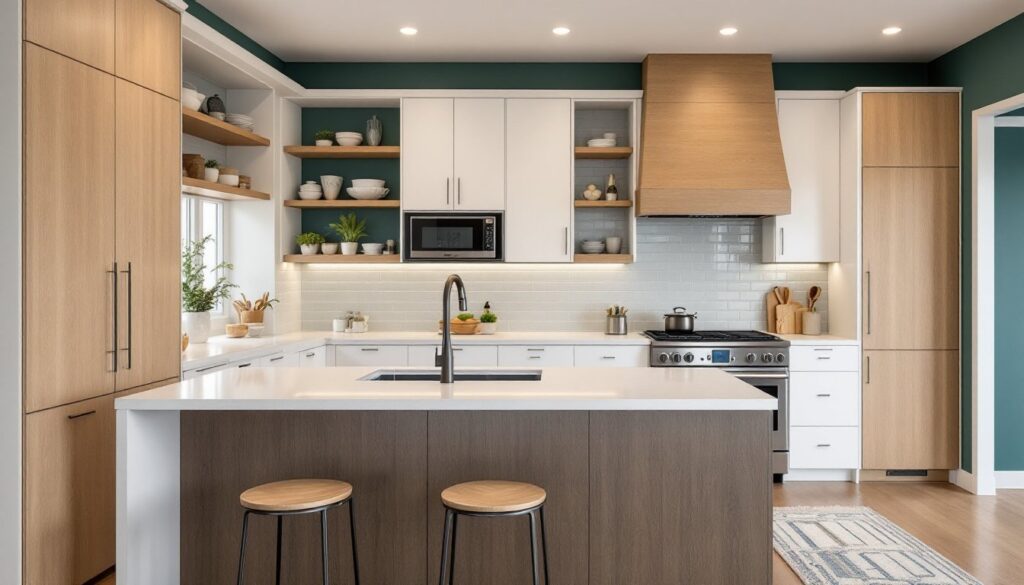
Kitchen remodeling in 2026 is about smarter choices, not fancier finishes. Homeowners are moving beyond granite countertops and subway tile toward thoughtful layouts, durable materials, and tech-forward features that actually solve real problems. Whether someone’s refreshing cabinets, reconfiguring their work triangle, or installing a whole new kitchen, the trends shaping remodels this year blend timeless design with practical innovation. This guide walks through the must-know trends, from layout strategies to lighting solutions, so anyone tackling a kitchen remodel knows what’s current, what works, and what fits their space and budget.
Key Takeaways
- Modern kitchen remodel designs prioritize efficient layouts and the refined work triangle over oversized islands, with peninsula configurations and circular arrangements reducing unnecessary steps in smaller and larger homes respectively.
- Smart technology integration, including smart refrigerators, touchless faucets, induction cooktops with downdraft ventilation, and app-controlled LED lighting, has become standard in 2026 kitchen remodels rather than a luxury add-on.
- Sustainable materials like recycled glass countertops, FSC-certified wood cabinets, and large-format porcelain tiles are now baseline expectations, reflecting durability, low maintenance, and eco-conscious choices in today’s kitchen remodel trends.
- Warm neutral color palettes with purposeful accent walls in deeper tones (hunter green, slate blue, terracotta) and matte finishes replace the all-white kitchen aesthetic, creating livable and sophisticated spaces.
- Deep drawers with soft-close mechanisms, pull-out shelves, lazy susan corner cabinets, and under-sink organization systems solve the most common kitchen complaint of inaccessible storage.
- Layered lighting combining recessed ambient fixtures, under-cabinet task lighting, and statement pendant lights with dimmer controls and tunable color temperatures creates both functional and aesthetically refined kitchens.
Modern Design Aesthetics and Layout Innovations
The 2026 kitchen remodel ditches the oversized island in favor of intentional, efficient layouts. Designers are favoring working kitchens, spaces where traffic flows naturally and prep areas connect logically to cooking and cleanup zones. Open shelving pairs with closed cabinetry for visual balance and function: mixing finishes (natural wood, matte black, white) avoids the sterile “model home” feel.
The work triangle, sink, stove, refrigerator, is still king, but it’s being refined. Kitchen layouts are getting longer and narrower in smaller homes, or more circular in larger ones, to reduce unnecessary steps. Peninsula configurations are replacing large islands in tight spaces, offering prep surface without blocking sightlines.
Minimalist hardware is standard. Flush-mount or push-to-open cabinet systems reduce visual clutter and improve cleanability. Toe-kick lighting is creeping in, providing ambient glow and making the space feel larger. Deeper, purposeful color accents, say, a painted accent wall in deep navy or forest green, replace the all-white kitchen aesthetic of recent years.
For cabinet frame and style, white oak and walnut veneer are popular alternatives to painted cabinetry, offering warmth without staining upkeep. Door profiles lean toward modern flat-panel or minimalist shaker styles rather than ornate crown molding.
Smart Technology Integration in Today’s Kitchens
Smart kitchen tech is moving from novelty to necessity. Smart refrigerators that track groceries and sync with shopping lists are becoming standard in mid-to-high-end remodels. Touchless faucets with adjustable spray patterns and water-conservation features reduce mess and waste, especially useful near prep stations.
Induction cooktops with integrated ventilation (downdraft systems built into the countertop) are trending, offering cleaner air and a sleeker countertop profile than overhead hoods. Some systems include smart controls via smartphone apps to monitor cooking progress remotely.
Under-cabinet and recessed LED lighting with dimming controls is nearly standard: many now integrate voice-controlled systems or app-based scheduling. Countertop outlets with USB-C and 120V integrated into backsplash or countertop edges let homeowners charge devices without visible cords.
Water filtration at the tap, whether through faucet-integrated systems or under-sink units, is essential. Reverse osmosis systems are popular for those prioritizing filtered drinking and cooking water without bottle waste.
Note: Smart appliances require reliable WiFi and occasional software updates. Older homes may need a network upgrade or mesh WiFi system for consistent connectivity throughout the kitchen.
Sustainable Materials and Eco-Friendly Choices
Sustainability is no longer a premium add-on: it’s a baseline expectation in 2026 kitchen remodels. Recycled glass countertops (a mix of crushed glass and resin or cement) are durable, low-maintenance, and available in dozens of color combinations. Solid surface materials and engineered quartz outperform natural stone for durability while using recycled content in many products.
Cabinets made from FSC-certified wood (Forest Stewardship Council) or plywood with no-VOC (volatile organic compound) finishes are standard. Particleboard and MDF cores are acceptable if they carry CARB (California Air Resources Board) Phase 2 certification, ensuring low formaldehyde off-gassing.
Cork and sustainably harvested bamboo are popping up as underlayment or accent materials. Cork resilience reduces fatigue when standing for long periods: bamboo’s hardness rivals oak, making it kitchen-durable.
Flooring trends favor large-format porcelain tiles (often 2 feet by 4 feet or larger) with minimal grout lines, reducing debris traps and simplifying cleaning. Luxury vinyl plank (LVP) with wood-look finishes and waterproof cores is cost-effective and realistic if sourced from recycled-content manufacturers.
Countertop sealers and finishes are shifting to water-based or natural oils on wood. Ongoing maintenance (regular re-oiling of wood surfaces, resealing of porous materials) beats replacing high-VOC finishes every few years.
Color Palettes and Finish Trends Taking Over
Warm neutrals dominate 2026 kitchen remodels: warm whites, soft creams, warm grays, and greige (gray-beige blend) provide a livable, forgiving base. But the real trend is purposeful accents. Deeper tones, hunter green, sage, slate blue, terracotta, appear on one wall, a feature cabinet run, or a painted soffit, anchoring the space.
Matte and brushed metal finishes replace glossy chrome and polished brass. Brushed stainless steel on appliances, hardware, and fixtures is nearly ubiquitous. Oil-rubbed bronze and matte black hardware add warmth and sophistication without looking dated.
Countertop finishes are shifting toward leathered or honed stone (rather than polished) for less glare and a softer, more livable aesthetic. Wood countertops with matte or natural oil finishes (over sealed surfaces) appear in high-traffic areas as accent zones.
Backsplash tiles are moving away from small subway in favor of larger format tiles, textured finishes, or minimal backsplash, some kitchens skip it entirely if walls are sealed or wipeable. Patterned tiles remain an accent option but are used sparingly to avoid visual fatigue.
Cabinet colors split into two camps: soft, warm whites and creams (with wood veneer doors for texture) or darker tones like charcoal, navy, or forest green paired with warm wood accents or light counters and walls for contrast.
Storage Solutions and Functionality Upgrades
Deep drawers with soft-close mechanisms are replacing traditional cabinet doors for most cooking equipment and utensils. Pull-out shelves and roll-out organizers let homeowners access items at the back without emptying the whole cabinet, a small investment ($200–$500 per cabinet retrofit) that dramatically improves usability.
Vertical storage and wall-mounted systems are essential in compact kitchens. Open shelving, pegboard, or magnetic knife rails above counters free up cabinet space while keeping essentials visible and accessible.
Under-sink organization has evolved beyond trash. Pullout recycling bins with compartments for multiple waste streams, integrated air filters, and adjustable shelf systems maximize the dead zone typically wasted by pipes. Drawers below the sink (requiring pipe relocation but worth it) provide dry storage and keep cleaning supplies contained.
Walk-in pantries are still ideal, but built-in pantry cabinetry within the kitchen footprint, tall cabinets with deep shelves, adjustable or pull-out wire baskets, saves steps and keeps staples within arm’s reach. For older homes without space for a proper pantry, floor-to-ceiling cabinets adjacent to the kitchen work well.
Corner cabinets now feature lazy susans or pull-out carousel shelves (a $150–$300 upgrade) instead of dead, inaccessible space. These practical upgrades solve the most common kitchen complaint: “I have plenty of storage, but I can’t reach it.”
Lighting Innovations for Style and Performance
Layered lighting, ambient, task, and accent, is non-negotiable in 2026. Recessed LED fixtures in the ceiling provide ambient light efficiently (typically 4,000K or 5,000K color temperature for clarity), while under-cabinet task lighting illuminates countertops for prep work and cooking without glare.
Suspended or statement pendant lights above islands or eating areas add style and focused task lighting. Modern designs favor matte finishes and warmer color temperatures (2,700K to 3,000K) for a livable, not sterile, feel. Expect pendant lights in materials like brushed brass, matte black, ceramic, or frosted glass rather than chrome.
Toe-kick lighting, integrated along cabinet bases, creates ambient glow that makes kitchens feel larger and provides subtle night-time navigation. These run on low-power LED strips and are mostly decorative, though they’re increasingly common in remodels aimed at visibility and aesthetics.
Dimmers and smart controls (voice-activated or app-based) let homeowners adjust brightness for cooking versus entertaining. Color temperature adjustable bulbs (tunable white, 2,700K to 5,000K) are available and allow transition from cool task lighting during the day to warm, relaxing tones in the evening.
Natural light maximization is trending, larger windows or skylights above islands or sinks bring daylight in, reducing daytime electric usage. Frosted glass cabinet doors paired with interior lighting blur the line between cabinetry and accent lighting, giving kitchens depth without clutter.
Conclusion
A 2026 kitchen remodel succeeds when it balances efficiency, durability, and aesthetics. Smart layouts paired with functional storage, sustainable materials, and intuitive lighting create spaces that feel current without chasing fads. Homeowners shouldn’t feel pressure to add every trend, prioritize what solves real frustrations in their workflow. Start with layout and storage upgrades if the footprint is a problem, invest in quality appliances and fixtures that’ll last a decade, and let finishes and colors evolve as personal style emerges. A thoughtfully remodeled kitchen pays dividends in both daily use and home value.