
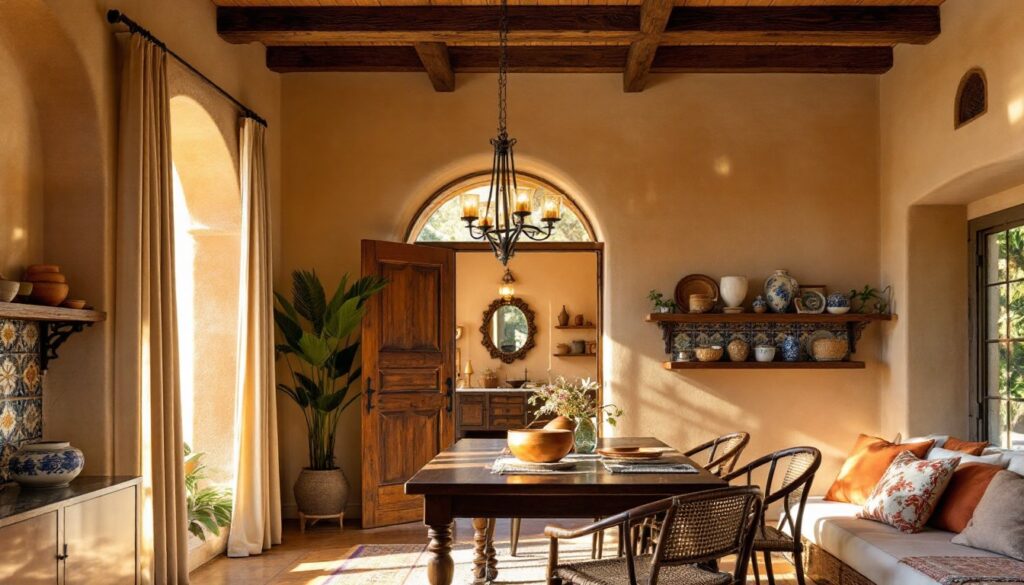
Spanish Revival interior design draws from centuries of architectural heritage blending Moorish, Mediterranean, and Spanish colonial influences. This style transforms spaces into warm, inviting havens through distinctive arches, vibrant tilework, and rich materials that feel both lived-in and elegant. Homeowners seeking to incorporate Spanish Revival design don’t need a complete renovation, strategic additions of key elements can authentically capture the aesthetic. Whether updating a single room or planning a whole-home transformation, understanding Spanish Revival’s core principles helps guide material selection, layout decisions, and styling choices that deliver lasting impact and genuine character.
Key Takeaways
- Spanish Revival interior design blends Moorish, Mediterranean, and Spanish colonial influences to create warm, inviting spaces that feel handcrafted and authentic without requiring complete renovations.
- Arches, exposed beams, and hand-painted tiles form the architectural backbone of Spanish Revival design, with tiles ranging from artisanal hand-painted pieces ($15–$50+ per tile) to quality reproductions ($3–$10).
- Warm, earthy color palettes featuring terracotta, ochre, and cream on walls allow decorative elements like tilework, wrought iron, and carved wooden accents to become visual focal points.
- Authentic Spanish Revival furniture prioritizes solid wood construction and visible craftsmanship, but layering textiles and accessories with modern pieces maintains the aesthetic while improving livability.
- Strategic lighting through wrought iron fixtures and fixtures with visible hand-forged details creates the warm, diffused ambiance essential to Spanish Revival spaces, with authentic options ranging from $200–$600+.
- Begin transforming a space with a single signature architectural feature—such as a tiled accent wall or statement archway—then build layered, intentional choices that honor Mediterranean heritage while remaining personally meaningful.
What Is Spanish Revival Interior Design?
Spanish Revival interior design emerged in the early 20th century as a romantic reimagining of historic Spanish and colonial architecture, particularly popular in the American Southwest and California. The style pulls directly from centuries of Mediterranean, Moorish, and Spanish colonial traditions, think ornate plasterwork, hand-painted tiles, and dramatic archways that evoke haciendas and mission-era buildings.
Unlike a strict historical recreation, Spanish Revival allows flexibility. It balances authenticity with livability, blending period-appropriate elements like clay tiles and carved wooden details with modern comforts and finishes. The core philosophy centers on creating spaces that feel timeless, inviting, and connected to craft traditions. Materials matter, terracotta, hand-thrown ceramics, natural wood, and wrought iron appear throughout genuine Spanish Revival spaces. The overall effect is one of warmth and permanence, never cold or sterile.
Key Architectural and Design Elements
Spanish Revival relies on specific architectural features and design choices that distinguish it from other styles. These structural and visual elements create the signature Mediterranean atmosphere that defines the aesthetic.
Arches, Columns, and Exposed Beams
Arches anchor Spanish Revival interiors. Rounded barrel arches over doorways, windows, and interior openings signal the style immediately and create dramatic vertical emphasis. These can be full permanent installations (requiring structural assessment if load-bearing) or applied trim details on existing rectangular openings using flexible moulding. Semicircular arches over entryways and archways between rooms become focal points that organize spatial flow.
Wooden columns or pilasters (decorative flattened columns attached to walls) support arches and add gravitas to entries and room dividers. Rough-hewn beams, whether solid wood or decorative faux beams attached to ceilings, introduce texture and shadow that reinforces the handcrafted heritage. Exposed wooden ceiling joists painted in warm earth tones or left natural create visual interest and break up flat ceiling planes. Note: Removing drywall to expose structural beams requires careful inspection, not all can be safely exposed without additional support.
Tiles, Patterns, and Color Palettes
Hand-painted and patterned tiles define Spanish Revival more than perhaps any other single element. These appear as backsplashes, floor applications, accent borders, and wall inserts. Traditional Talavera tiles, handmade ceramics from Mexico featuring intricate geometric and floral motifs in blues, greens, yellows, and creams, are authentic choices. Similar Moroccan and Portuguese tiles also fit the aesthetic. Budget expectations vary widely: artisanal hand-painted tiles run $15–$50+ per tile, while quality reproductions cost $3–$10 each.
Color palettes lean warm and earthy, terracotta, ochre, burnt sienna, cream, and warm whites dominate. Accent colors include deep blues, forest greens, and rich reds, often appearing in tilework or textile details rather than as primary wall colors. Walls themselves typically stay neutral (warm whites, soft earth tones) to let architectural features and decorative elements shine. This restraint prevents spaces from feeling cluttered or overstimulating.
Furniture and Decorative Accents
Authentic Spanish Revival furniture prioritizes solid wood construction, carved details, and visible joinery. Pieces feel substantial and handmade, never mass-produced or glossy. Tables, chairs, and cabinets in dark wood, walnut, oak, or pine, with turned legs, decorative cutouts, and hand-carved embellishments are signature. Leather seating, often tooled or studded, adds richness and ages beautifully.
If sourcing original or reproduction pieces feels challenging, focus on core functional items (dining table, seating) in authentic style, then layer in textiles and accessories for flexibility. A heavy wooden table paired with simple modern chairs still anchors the room: Spanish Revival flourishes in upholstery and surrounding décor complete the look.
Decorative accents multiply the visual richness. Wrought iron, light fixtures, mirror frames, wall sconces, and architectural grilles, introduces shadow play and craftsmanship. Pottery and ceramics arranged on shelves or walls bring color and organic texture. Woven baskets, wooden boxes, and carved wooden pieces add layered interest. Religious iconography, carved saints, or framed artwork depicting Spanish or colonial scenes align with historical tradition but feel personal only when they genuinely matter to the space.
A single focal point, an ornate wooden mirror, a prominent built-in tile alcove, or a carved wooden cabinet, often anchors a room and prevents Spanish Revival elements from feeling scattered. This anchoring piece guides other choices and creates coherence.
Lighting and Textiles
Lighting in Spanish Revival spaces comes from wrought iron fixtures, hanging lanterns with amber or frosted glass panels, wall sconces with scrolled iron arms, and table lamps with iron bases topped in linen or parchment shades. These fixtures cast warm, diffused light rather than bright, clinical illumination. A wrought iron chandelier in an entry hall or above a dining table becomes an architectural statement. Candles in iron holders or glass votives supplement electric lighting and enhance the romantic, warm ambiance the style seeks.
Choose fixtures with visible welds and hand-forged details, not shiny or overly polished finishes. Patinated iron (showing age and oxidation) reads more authentically than bright metal. Budget $200–$600+ for authentic-looking wrought iron fixtures: mass-produced alternatives cost less but sacrifice character.
Textiles include woven rugs with geometric patterns in natural fiber (jute, wool) or hand-dyed fabrics, heavy linen or cotton window treatments in neutral or warm tones, and embroidered or woven throw pillows featuring traditional patterns. Authentic woven textiles from Mexico, Spain, or Morocco carry genuine heritage. Machine-made reproductions offer budget-friendly alternatives without compromising the aesthetic, focus on color and pattern alignment rather than sourcing cost.
Window treatments typically favor simplicity: long linen curtains in cream or earth tones, wooden shutters (painted or natural), or wrought iron curtain rods. Heavy fabrics and layered looks (curtains plus a valance) create formal richness in living spaces: simpler single panels work for casual areas. The goal is drapery that softens hard architectural lines while allowing light control appropriate to each room.
Conclusion
Spanish Revival interior design succeeds through layered, intentional choices rather than accumulation. The richest spaces balance architectural structure (arches, exposed beams, tilework) with carefully selected furniture and textiles that feel handcrafted and warm. This style tolerates personal interpretation, there’s room for modern appliances, contemporary art, or non-traditional color accents without breaking authenticity, provided core elements remain grounded in Mediterranean heritage.
Begin with one signature architectural or design feature, a tiled accent wall, an archway, or a statement light fixture, and build from there. Spanish Revival rewards patience and thoughtful sourcing, creating interiors that feel rooted in tradition while remaining thoroughly livable and personally meaningful.