
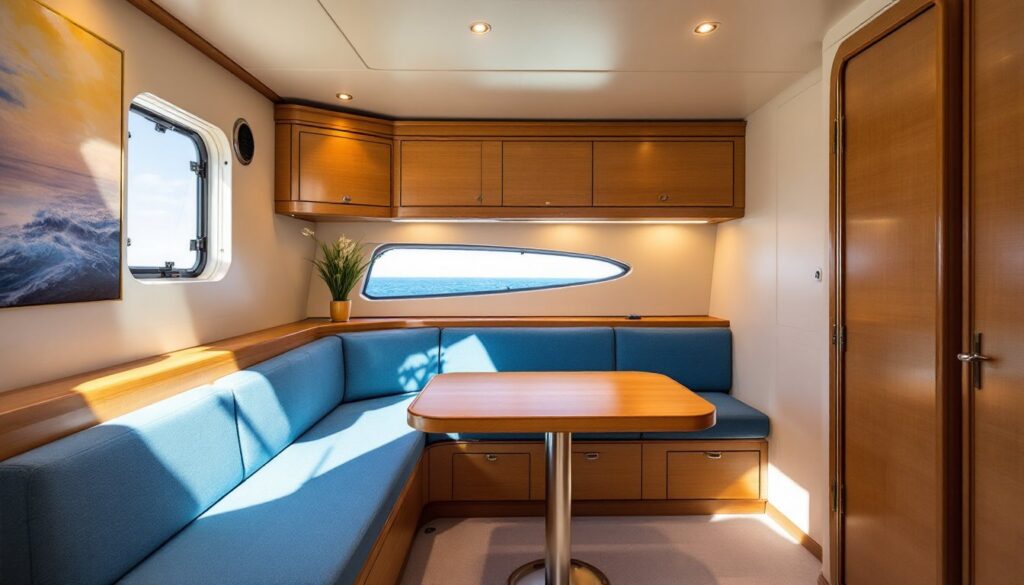
Ship interior design presents a unique puzzle that demands equal parts creativity and practical engineering. Unlike land-based construction, maritime spaces operate under strict weight limits, moisture exposure, and motion stresses that conventional interior design ignores. Whether working on a luxury yacht, commercial vessel, or naval ship, designers must balance aesthetics with seaworthiness, making every square foot earn its place aboard. This guide covers the core principles that turn cramped, challenging maritime environments into comfortable, livable spaces without compromising safety or performance.
Key Takeaways
- Ship interior design must balance aesthetics with seaworthiness by accounting for motion stresses, salt spray, humidity, and strict weight limits that land-based construction doesn’t face.
- Vertical storage systems, integrated furniture, and open sightlines maximize limited cabin space, making tight maritime environments feel functional and less cramped.
- Marine-grade materials—including rot-resistant teak, 316-grade stainless steel, closed-cell foam insulation, and two-part polyurethane finishes—are essential to withstand prolonged moisture, vibration, and corrosion at sea.
- Lighting design, ventilation, and humidity control directly impact crew morale and passenger comfort, requiring LED dimming options and mechanical dehumidification to prevent mold and eye strain.
- Ship interior design constraints often drive smarter, more innovative solutions by forcing designers to prioritize durability and functionality without sacrificing comfort or livability.
Understanding the Unique Challenges of Maritime Spaces
Maritime spaces aren’t just small, they’re subject to forces that land buildings never face. Constant vibration, salt spray, humidity, and the ship’s motion all attack materials and finishes relentlessly. A designer working on a yacht interior must account for heeling (the angle a vessel tilts when turning), pitching (nose-up and nose-down motion), and yawing (side-to-side turning). Furniture and fixtures must be secured to resist these movements while still looking intentional, not industrial.
Moisture is another primary concern. Salt air accelerates corrosion and causes wood swelling, mold growth, and delamination in conventional materials. Materials that perform fine in a land-based home, particleboard, drywall, standard plywood, fail quickly aboard ship. Naval architects and maritime designers specify marine-grade materials: teak and other naturally rot-resistant woods, stainless steel fasteners, closed-cell foam insulation, and marine-grade adhesives that cure underwater if needed.
Weight and balance matter deeply. A yacht’s stability depends on ballast and load distribution. Adding heavy marble countertops or solid mahogany cabinetry can affect the vessel’s center of gravity and fuel efficiency. Commercial ships operate on tighter margins: every kilogram of interior weight reduces cargo capacity. This reality forces designers to think in terms of ounces and material density, not just aesthetics. Aluminum framing, lightweight composites, and thin laminates replace traditional steel studs and solid wood joinery.
Core Design Principles for Ship Interiors
Maximizing Space and Flow
Ship cabins, galleys, and common areas often measure less than half the square footage of their land-based counterparts. A yacht stateroom might be 140 square feet, roughly the size of a bedroom closet. Success means eliminating wasted space and creating visual and functional flow.
Vertical storage is non-negotiable. Bulkhead-mounted shelves, overhead lockers, and hanging storage systems turn walls into inventory. Furniture with integrated storage, cabin settees with drawers underneath, tables with shelving, beds with port-side lockers, doubles functionality without increasing footprint. Open sightlines matter too: transparent materials, glass partitions, and minimal visual clutter make tight spaces feel larger.
Passageway (hallway) widths are tightly regulated: most maritime codes require a minimum 30-inch passage, though luxury vessels aim for 36 inches or more for comfort. Doors swing outward or pocket into bulkheads to avoid blocking traffic. Galley (kitchen) layouts follow ship-specific geometry: a linear “galley” along one bulkhead suits narrow spaces better than an L-shaped land kitchen. Counter heights must accommodate the slope of the vessel and operator reach angles during heeling.
Durability and Material Selection
Marine-grade teak costs 3–5 times more than domestic oak, but its natural oils resist rot and weather without sealers. Stainless steel (316-grade, not 304) stands up to salt spray better than chrome or mild steel. Closed-cell polyurethane foam insulation won’t absorb water if the hull is breached, unlike traditional fiberglass batts.
Cabinetry and trim demand marine plywood with exterior-grade veneer and waterproof epoxy adhesives. Varnish and paint must be two-part polyurethane or epoxy formulations that flex with wood movement and resist moisture penetration. Standard polyester finishes yellow and fail within 2–3 seasons on deck: maritime topcoats remain stable for 5+ years under UV and salt exposure.
Floor coverings present a tradeoff. Solid wood is beautiful but slippery when wet and prone to rot. Non-skid coatings help, but many maritime flooring specs call for marine-grade vinyl, rubber, or sealed cork. These materials drain water, resist mildew, and provide grip underfoot, critical in galleys and engine rooms where spills happen daily. Epoxy or polyester self-leveling floors seal concrete or steel substrates completely, eliminating moisture pathways.
Creating Comfort and Aesthetics at Sea
A functional ship interior still needs to feel like home. Crew morale and passenger satisfaction depend on layouts that don’t feel cramped or clinical, color schemes that calm rather than agitate, and lighting that mimics natural day-night rhythms without causing fatigue.
Cabin proportions benefit from horizontal visual lines, long, low shelves and trim molding that run the length of a bulkhead make spaces feel wider. Light colors (off-white, soft gray, pale natural wood) reflect available light and expand perceived volume. Accent walls in warm earth tones or subtle blues create psychological variety without overwhelming 140 square feet. Avoid strong patterns and busy finishes: they amplify the sensation of confinement.
Lighting design is critical. Standard incandescent or bare fluorescent strips feel institutional and flicker under ship motion. LEDs rated for dimming allow crew to adjust ambiance and reduce eye strain. Recessed fixtures in overheads (ceilings) save clearance: surface-mounted lamps and sconces must be sturdily mounted and use shatterproof diffusers in case of rough seas. Emergency lighting, glow strips along passageways and exit signs, is mandated by maritime law (IMO SOLAS standards on passenger ships).
Ventilation and humidity control don’t get the design attention they deserve, yet they make or break long-term comfort. Mechanical dehumidification (often integrated with HVAC) prevents mold and condensation that plague closed vessels. Natural materials like teak breathe: sealed finishes and non-porous laminates can trap moisture. Many shipyards specify breathable primers and paints that allow slight vapor transmission. Portlights (windows) require double-pane, salt-resistant glazing and frames that don’t corrode.
Furniture selection must withstand constant motion and saltwater spray. Bolted-down cabin tables and fixed settees (built-in seating) outperform freestanding pieces that slide and shift. Upholstery should use solution-dyed synthetic fabrics or marine-grade leather, not cotton or untreated wool, which harbor mildew. Mattresses need marine-grade foam cores and removable, washable covers. Galley appliances must be gimbaled (suspended on pivots) or secured with heavy-duty mounts to prevent shifting during rolls and pitches.
Conclusion
Ship interior design succeeds when function and livability work together, not against each other. Tight spaces demand clever storage, robust materials, and intentional layouts, but luxury and comfort aren’t negotiable either. Whether you’re specifying a cabin refit, consulted on a new build, or simply curious about why maritime interiors look and feel different, the principle remains constant: every design choice must earn its weight and prove its durability. That constraint, paradoxically, often leads to smarter, more innovative solutions than unlimited space ever could.