
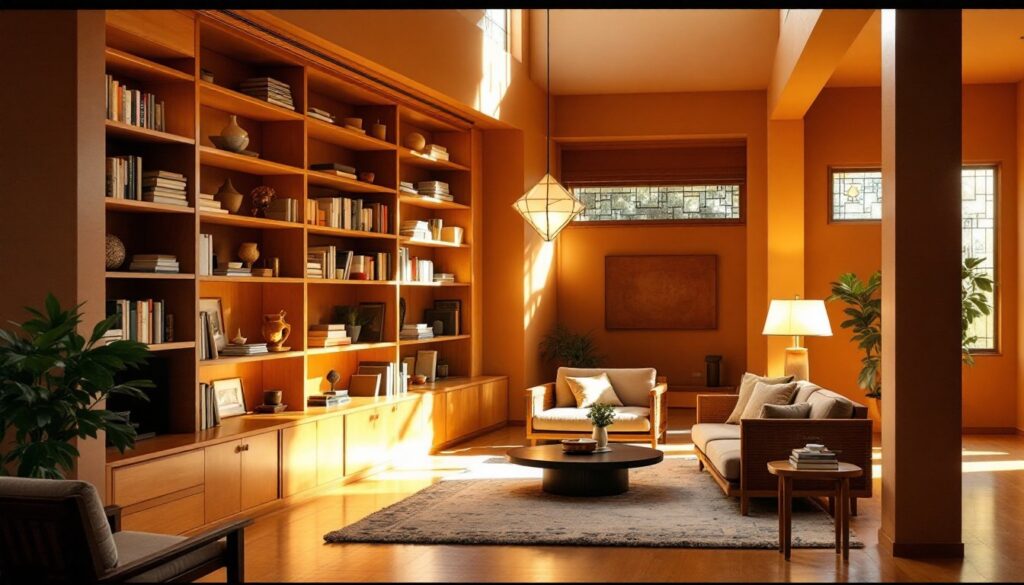
Frank Lloyd Wright’s name echoes through design history, not just as an architect, but as a visionary who fundamentally changed how we think about interior spaces. More than 75 years after his death, homeowners and designers still chase the principles he championed: spaces that feel organic, purposeful, and deeply connected to their inhabitants. Unlike trendy design movements that fade with the seasons, Frank Lloyd Wright’s interior design philosophy addresses something permanent: how humans actually live. Whether you’re renovating a kitchen or reimagining an entire home, understanding Wright’s approach offers practical tools for creating spaces that age beautifully and function flawlessly. This isn’t about copying his work wholesale, it’s about borrowing his logic.
Key Takeaways
- Frank Lloyd Wright’s interior design philosophy prioritizes organic, purposeful spaces where every element serves a function and belongs within the building’s integrated whole.
- Apply Wright’s principles by assessing materials first, simplifying your color palette, and integrating storage into walls rather than relying on freestanding furniture.
- Horizontal lines, geometric patterns, built-in furniture, and honest material expression are signature hallmarks of Frank Lloyd Wright interior design that remain relevant today.
- Arrange furniture and lighting to match actual movement patterns and tasks rather than following trends, creating spaces that feel inevitable and work beautifully.
- You don’t need to replicate a Wright house; focus on ruthlessly questioning whether each element serves a purpose and belongs in your specific space and location.
Who Was Frank Lloyd Wright and Why His Design Philosophy Still Matters
Frank Lloyd Wright (1867–1959) wasn’t just designing buildings and interiors: he was conducting an experiment in how people should live. A student of Louis Sullivan and, more importantly, an obsessive observer of the world around him, Wright believed that good design solved problems at their root rather than applying cosmetic fixes.
What made Wright different from his contemporaries was his refusal to separate the interior from the building itself. He designed homes as integrated wholes, every cabinet, every light fixture, every surface was part of a larger conversation about how a family should move through space. His philosophy drew from Japanese architecture, prairie landscapes, and the emerging modern movement, but he synthesized these influences into something distinctly his own.
Why does this matter now? Because Wright’s interiors don’t scream “designed”, they feel inevitable. A Wright-influenced kitchen flows because the appliances, work surfaces, and storage are positioned for the actual sequence of tasks. A bedroom feels restful because the proportions and materials support quiet rather than demand it. These aren’t accidents. They’re the result of ruthless logic applied to the question: “What does this space need to do?” In a world drowning in trend-chasing décor, that timeless orientation is worth studying.
Core Principles of Wright’s Interior Design Approach
Organic Architecture and Natural Integration
Wright’s concept of organic architecture means interiors grow from their site and purpose as naturally as a tree grows from soil. He didn’t layer decoration on top of a space: he shaped the space itself to feel inevitable.
In practical terms, this translates to several moves. First, materials reflect their local context. A home in the desert uses earth tones and stone: one in a forest incorporates wood that echoes the surrounding trees. Second, built-in elements (cabinets, benches, shelving) become part of the architecture rather than movable furniture floating in the room. Third, colors, textures, and spatial flow respond to what the space is rather than what’s “in style.”
For your own home, organic integration means asking: What materials belong here? What natural light and views exist? What’s the climate and landscape outside? A living room overlooking a forest benefits from deep wood tones and materials that age gracefully, while one in an urban setting might echo the geometry and simplicity of its surroundings. The goal isn’t to transplant a Wright house into your neighborhood, it’s to let Wright’s logic guide your choices so the interior feels like it belongs where it stands.
Form Follows Function in Every Detail
Wright inherited Louis Sullivan’s famous maxim “form follows function” and took it seriously down to doorknob scale. In a Wright interior, a stair isn’t just a way to reach the second floor: its proportions, handrail design, and relationship to surrounding walls are tuned to how people actually climb it. A light fixture isn’t decoration: it’s engineered for the task it illuminates.
This principle eliminates visual clutter. If something doesn’t serve a function, it has no reason to exist. That means less ornament for its own sake and more attention to materials in their honest form, wood showing its grain, brick showing its texture, metal revealing its structure.
Applied to your home, this means ruthlessly asking about every element: Why is this here? What is it doing? A shelf exists to hold things at a reachable height, so its depth and spacing should reflect that. A doorway’s width and height should suit how people move through it. A paint color should enhance the room’s purpose, not just look pretty. This mindset cuts through decorating paralysis and points toward genuine solutions.
Signature Design Elements You Can Recognize
Several visual hallmarks signal Wright’s influence, and spotting them helps you understand his method.
Geometric ornamentation appears frequently, stylized patterns based on circles, squares, and interlocking shapes. Unlike fussy Victorian florals, these patterns feel architectural and mechanical. You’ll see them in stained-glass windows, frieze bands, and tile work.
Built-in furniture is a cornerstone. Wright designed custom benches, cabinets, and shelving that integrate with wall and ceiling planes. This approach maximizes efficiency (storage is part of the architecture, not stealing floor space) and creates visual continuity.
Horizontal lines dominate interiors and exteriors. Rooflines, trim bands, window sequences, and furniture profiles all emphasize the horizon. This was influenced by the prairie landscape and creates a grounding, calm effect.
Open floor plans appear in Wright homes earlier and more radically than many realize. Rather than small, boxed rooms, his interiors flow with minimal walls, allowing sight lines to extend and spaces to feel larger. Structural columns replace load-bearing walls where possible.
Natural materials in honest expression, wood stain rather than paint, exposed brick, concrete shown as concrete, copper that’s allowed to patina. Materials look like themselves, not disguised.
Custom light fixtures cast light from integrated sources rather than generic ceiling fixtures. Light is part of the spatial design, not an afterthought.
When you’re analyzing a room you admire or planning your own, these elements offer a checklist. None of them requires recreating a full Wright house. A single built-in bookcase, a geometric tile pattern in your entry, or a carefully considered material palette can carry his logic forward.
How to Apply Wright’s Principles to Your Own Home Today
You don’t need to hire an architect or tear down walls to channel Wright’s thinking. Start with these concrete moves.
1. Assess your materials and let them dictate mood. If your home has original wood floors, lean into it. Choose wall colors and furnishings that complement rather than fight that wood tone. If you’re working with neutral drywall and modern finishes, select materials (cabinetry, flooring, trim) that create intentional harmony. Materials should feel like they belong together, not like they wandered in from different stores.
2. Integrate storage into walls, not the room. Rather than free-standing bookcases, install built-in shelving that runs full-height. Built-ins create a cleaner visual line, maximize usable space, and feel architecturally honest. This often requires framing (fastening to studs, properly supporting loaded shelves) and possibly coordinating with your framing or drywall, worth consulting a carpenter if you’re unsure.
3. Simplify your color palette. Pick a dominant color (often a neutral or muted earth tone) and limit yourself to one or two accents. Let materials provide variation rather than relying on multiple painted walls. This creates the calm, cohesive feeling Wright’s interiors possess.
4. Arrange furniture to support actual movement patterns. Don’t float a sofa in the middle of the room because a magazine suggested it. Position seating near natural light for reading, work surfaces near entries for sorting mail, storage near where items are used. This is functional thinking, and it invariably looks better than arbitrary placement.
5. Choose lighting that’s integrated and purposeful. Replace generic ceiling fixtures with task lighting under cabinets, sconces flanking a mirror, or a pendant light directly over a kitchen island. Light should come from logical places and illuminate what matters. If you’re rewiring, consult the National Electrical Code (NEC) requirements for your region, many jurisdictions require licensed electricians for anything beyond simple fixture swaps.
6. Emphasize horizontal lines in your layout. Arrange artwork, shelving, and trim bands to run horizontally rather than vertically. This naturally calms the eye and echoes Wright’s prairie influence.
Conclusion
Frank Lloyd Wright’s interior design isn’t about aesthetic purity, it’s about spaces that work. By starting with honest materials, understanding how you actually live, and designing every element to serve a purpose, you inherit his core method. You don’t need to live in a Wright house to think like one. Every cabinet you design, every color you choose, and every piece of built-in storage you install is an opportunity to ask the questions he asked: Does this serve the space? Does it belong here? Does it make life easier? Answer those honestly, and you’re already designing in the Wright spirit.