
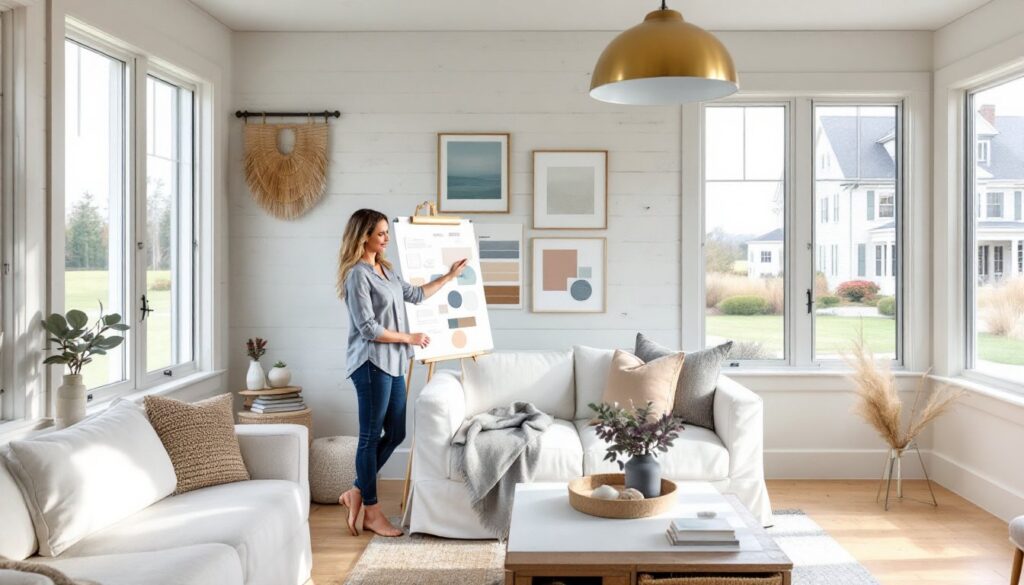
Long Island homeowners have distinct design challenges and opportunities. The region spans from suburban comfort zones to waterfront estates, and the climate, architecture, and neighborhood character demand thoughtful interior choices. Whether updating a mid-century ranch or reimagining a colonial on the North Shore, getting the design right matters, both for daily living and eventual resale value. Professional interior design on Long Island has evolved beyond luxury enclaves: today, homeowners across all price points recognize that smart design saves money, prevents costly missteps, and creates spaces that actually work for how families live. This guide explores why local expertise matters, which styles thrive on the Island, and how to partner with a designer who understands your home and your goals.
Key Takeaways
- Professional interior design on Long Island protects your investment by catching structural issues early, coordinating with local contractors, and preventing costly mid-project changes.
- Coastal and Hamptons styles remain popular for Long Island homes, combining soft neutrals with natural textures and abundant natural light for timeless, sophisticated spaces.
- Contemporary design appeals to younger families prioritizing function and visual clarity, using clean lines and bold accents while hiding clutter in built-in storage.
- Hiring an interior designer ranges from hourly consultations ($100–$200/hour) to full-service retainers, with many homeowners starting with a single room to test the relationship.
- Before engaging an interior designer on Long Island, be upfront about your budget, timeline, and whether you need full-service design, a design consultant, or styling guidance.
- Work with designers who ask about your lifestyle, timeline, and daily frustrations rather than jumping into color swatches, ensuring recommendations align with how you actually live.
Why Long Island Homeowners Choose Professional Interior Design
Hiring a professional interior designer on Long Island isn’t about luxury, it’s about making informed decisions that fit the region’s unique context. Long Island’s architecture spans several eras: postwar suburban housing stock, Victorian and Colonial farmhouses, waterfront contemporary homes, and newer developments. Each style requires a different approach to color palettes, furniture scale, window treatments, and lighting.
Professional designers bring three critical advantages. First, they understand local material costs and contractor networks, which prevents overpaying or hiring unreliable tradespeople. Second, they solve practical problems that homeowners often overlook: traffic flow in open-concept layouts, storage in compact kitchens, and managing harsh afternoon light from bay-facing windows. Third, they keep projects on budget and on schedule by creating detailed specifications upfront, rather than making costly changes mid-project.
Many Long Island homeowners hesitate because they assume interior design is purely cosmetic. In reality, good design planning catches structural limitations early, flags permit requirements, and coordinates with contractors seamlessly. A designer spots that your preferred kitchen layout blocks egress, or that your dream color choice will require three primer coats on water-stained drywall, before you’ve committed budget and emotion.
Cost is often a genuine concern. Long Island design services range from hourly consultations ($100–$200/hour) to full-service retainers (5–10% of construction costs). Many homeowners start with a single room, often the kitchen or primary bath, to test the relationship and see the value firsthand.
Key Interior Design Styles Perfect For Long Island Homes
Coastal and Hamptons Aesthetics
Coastal and Hamptons design remains deeply rooted in Long Island’s identity, especially east of Riverhead. This style isn’t about cheesy seashell décor: authentic Hamptons design balances relaxed elegance with restrained color and natural materials.
The palette typically features soft neutrals, whites, creams, soft grays, and warm taupes, punctuated by muted blues and greens. Natural textures anchor the look: whitewashed wood, linen, jute, and weathered metals. Large windows, minimal window treatments (or simple linen panels), and an emphasis on natural light are non-negotiable. Furniture favors clean-lined, slipcovered pieces that can withstand salt air and sand.
Coastal design works beautifully for waterfront homes on the North Shore and South Shore, but it translates well inland too. The airy, timeless quality appeals to homeowners seeking calm, sophisticated spaces. Pay attention to material durability, linen and natural fibers work in climate-controlled interiors but may deteriorate near salt spray. Designers familiar with Long Island’s humidity and seasonal exposure often recommend performance fabrics disguised as natural fibers for longevity.
Modern and Contemporary Design
Modern and contemporary design appeals to younger professionals and families prioritizing function and visual clarity. This approach values clean lines, neutral backdrops, and purposeful material choices, steel, concrete, warm oak, or walnut.
Modern Long Island homes often feature open-concept layouts and high ceilings, which contemporary design leverages effectively. The strategy uses bold accent walls (often deep charcoal, hunter green, or terracotta), statement lighting, and carefully curated art. Storage is seamlessly built-in rather than decorative, and every piece of furniture serves a clear purpose.
Where coastal design whispers, contemporary design speaks. This style suits suburban homes seeking an upscale, gallery-like feel without the stuffiness of formal design. It also accommodates families’ real-world needs, kids’ artwork, sports equipment, and tech gadgets, by designating open display (in curated groupings) and clever hidden storage.
The key pitfall: contemporary design can feel cold if executed without warmth. Successful designers layer in organic textures (wood, stone, textured upholstery) and warm metallics (brass, bronze) to prevent sterility.
How To Work With An Interior Designer on Long Island
Finding and hiring an interior designer on Long Island requires clarity about your goals, budget, and scope of work. Start by clarifying whether you need a full-service designer (who manages construction, sourcing, and timeline), a design consultant (who provides a plan and guidance but you hire contractors), or a styling coach (who helps with décor and arrangement).
Review portfolios carefully. Long Island designers should show homes with similar architecture, climate, and lifestyle to yours. If you’re redoing a 1970s colonial in Manhasset, a designer’s portfolio of minimalist Brooklyn lofts might not translate. Ask for references from homeowners, not just contractors, you’ll learn how the designer handled budget changes, timeline delays, and personality friction.
Be upfront about budget early. Long Island has pricey real estate, and design costs scale with renovation scope. A kitchen redesign (no structural changes) might cost $1,500–$3,000 for design: a full home overhaul with contractor coordination can run tens of thousands. Designers adjust their scope based on your budget, they might prioritize the most-used rooms or recommend phased projects.
Request a written agreement outlining deliverables (floor plans, color boards, material samples), timeline, fees, and revision limits. This prevents scope creep and protects both parties. Include clauses about how changes are handled and what happens if either party wants to end the relationship.
During the initial consultation, designers should ask questions: How long do you plan to stay in the home? Are you designing for resale or personal enjoyment? What daily frustrations does your current layout create? Do you entertain frequently? Are there accessibility needs? These answers shape every recommendation. A designer who launches into color swatches before understanding your life is missing the point.
Conclusion
Interior design on Long Island isn’t a luxury luxury or a cosmetic afterthought, it’s a strategic investment in your home’s function, value, and your daily quality of life. Whether you’re drawn to coastal elegance, contemporary clarity, or a blend that suits your lifestyle, the right designer ensures decisions are made intentionally, budgets are respected, and the result is a space you love living in. Start by clearly defining your goals and exploring local designers who understand the Island’s unique architectural character and climate challenges. Your home, and your wallet, will thank you.