
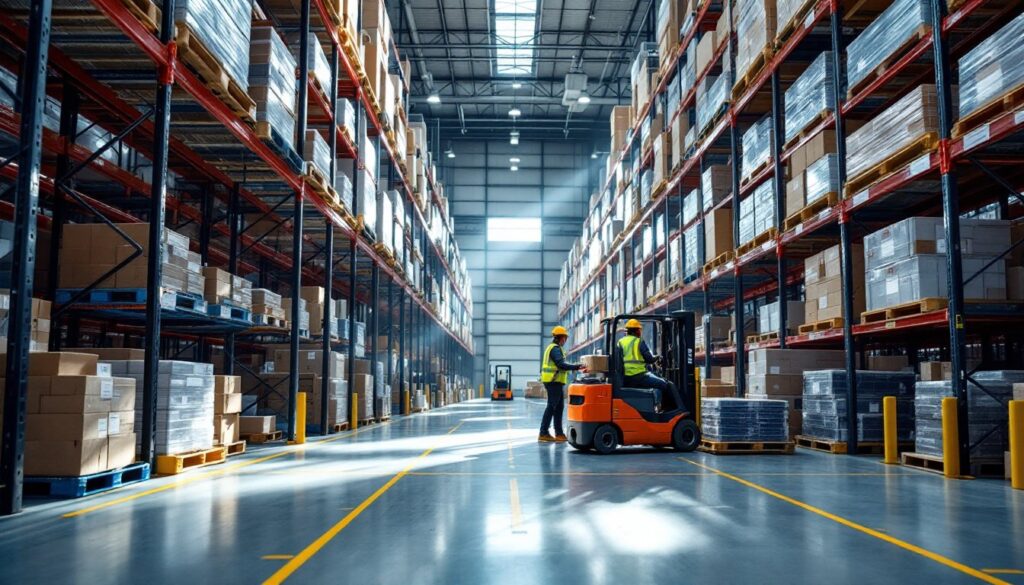
Manufacturing storage solutions have become a cornerstone of operational efficiency in modern facilities. Whether managing raw materials, work-in-progress inventory, or finished goods, the right storage system directly impacts productivity, safety, and profitability. In 2026, facilities managers face increasing pressure to maximize space utilization while maintaining inventory accuracy and worker accessibility. This guide walks through the essential types of manufacturing storage systems, selection criteria, and implementation best practices to help optimize any facility’s storage footprint and streamline daily operations.
Key Takeaways
- Manufacturing storage solutions directly impact productivity, safety, and profitability by reducing inventory shrinkage, labor waste, and OSHA violations while enforcing proper rotation protocols like FIFO and FEFO.
- Vertical racking and shelving systems can increase usable capacity by 30–40% without expanding the building footprint, making them cost-effective for space-constrained facilities.
- Automated Storage and Retrieval Systems (AS/RS) offer high-density, labor-saving benefits in standardized environments but require significant upfront capital ($500,000–$2 million+) and justify ROI through labor savings and error reduction.
- Effective system selection requires analyzing your inventory profile (SKU mix, weight, dimensions, turnover rates), space constraints, access frequency, and compliance requirements before implementation.
- Successful implementation depends on detailed site audits, team involvement, proper barcode or RFID tracking integration, thorough staff training, and regular maintenance inspections following RMI standards.
- Phased rollout of manufacturing storage solutions in high-impact zones first allows for measurable results validation and incremental expansion, reducing operational disruption and buyer’s remorse.
Why Manufacturing Storage Solutions Matter
Effective manufacturing storage solutions directly affect the bottom line. Poor storage practices lead to inventory shrinkage, lost products, safety hazards, and wasted labor hours searching for materials. When storage is organized and optimized, production schedules run on time, inventory turns faster, and floor space produces measurable value.
Beyond financial gains, safety is paramount. Improperly stacked materials, blocked aisles, and unstable shelving create injury risks and potential OSHA violations. The right storage system enforces inventory discipline, every item has a location, quantities are visible, and rotation follows first-in-first-out (FIFO) or first-expiration-date-out (FEFO) protocols, which is especially critical for industries like food manufacturing, pharmaceuticals, and chemical production.
Space optimization is another critical driver. Manufacturing real estate is expensive, and wasted cubic space is wasted money. Vertical racking systems, mezzanines, and automated retrieval solutions can multiply usable capacity without expanding the building footprint. This efficiency gain frees capital for other operational investments and improves overall facility ROI.
Finally, modern manufacturing demands real-time inventory visibility. Integrated storage systems paired with barcode or RFID tracking provide accurate stock levels, reduce demand forecasting errors, and support lean manufacturing principles that minimize excess inventory holding costs.
Types of Manufacturing Storage Systems
Vertical Racking and Shelving
Vertical racking is the workhouse of most manufacturing facilities. Heavy-duty pallet racking, typically rated for 2,500 to 4,500 pounds per level, uses horizontal beams supported by vertical uprights anchored to the floor. Common configurations include selective, drive-in, and push-back racks, each with different access patterns and density trade-offs. Selective racking (the most common) allows direct access to any pallet but uses more floor space per unit stored. Drive-in or push-back systems maximize vertical space at the cost of sequential access, making them ideal for bulk storage of consistent items.
Teering racks feature smaller beam loads (200–1,000 lbs) and serve light to medium-duty storage. They’re popular for small parts, tools, and work-in-progress inventory. Cantilever racks excel at holding long materials like pipes, lumber, or rolled goods. All racking systems must comply with the Rack Manufacturers Institute (RMI) standard ANSI MH16.1, which governs design, installation, and load ratings. Many jurisdictions also require licensed installers for permanent racking.
Dimensions vary widely, bays range from 4 to 6 feet deep and 8 to 10 feet wide, with shelf heights from 6 to 20+ feet depending on ceiling clearance and forklift capabilities. Actual load capacity depends on beam length, material thickness, and support spacing, so always verify with the manufacturer’s load tables.
Automated Storage and Retrieval Systems
Automated Storage and Retrieval Systems (AS/RS) represent the next tier of sophistication. These systems use robotic shuttles, cranes, or carousels to store and retrieve items from high-density storage without human intervention. A carousel system, for example, rotates items to a pick station, eliminating travel time. Shuttle systems guide bins or cases through vertical or horizontal channels, accessing specific locations in seconds.
AS/RS excels in high-volume, standardized environments, electronics assembly, pharmaceutical packaging, or automotive parts distribution. The upfront capital is steep, typically $500,000 to $2 million+ depending on size and complexity, but ROI justifies itself in labor savings, space efficiency, and error reduction. These systems also integrate seamlessly with warehouse management software (WMS), providing real-time inventory and analytics.
Hybrid approaches blend manual and automated storage, using carousel systems for high-turnover SKUs and static shelving for slower-moving items. This balances efficiency gains with cost-effectiveness for mid-sized operations.
Key Factors to Consider When Selecting Storage Solutions
Inventory profile is foundational. Analyze your SKU mix, the volume, weight, dimensions, and turnover rate of each product category. Light, small, frequently accessed items suit tiered shelving or carousels. Heavy, large, or low-turnover goods fit pallet racking. Mixed inventories often require multiple system types in different zones.
Space constraints shape decisions. Measure floor dimensions and ceiling height. Calculate how many pallets or cases you need to store, then work backward to required footprint. Don’t forget aisle widths, OSHA standards require minimum 44-inch aisles for pedestrian access and sufficient space for your forklift or material handling equipment. Some facilities can gain 30–40% more capacity by shifting to vertical systems without expanding the building.
Access frequency matters. High-turnover items need quick retrieval: bulk storage can prioritize density over speed. If your operation uses FIFO or FEFO rotation, select a system that naturally supports forward-pulling (like selective racking) rather than block stacking, which forces deep picking.
Budget and timeline are real constraints. Heavy-duty racking installed properly costs $40–$80 per pallet position. AS/RS demands higher capital but delivers measurable labor reductions. Consider phased implementation, install racking in high-impact zones first, then expand.
Future growth matters. Purchase systems with bolt-on expandability. Oversizing bays slightly or leaving vertical headroom for a second tier can future-proof your investment without major disruption later.
Compliance requirements vary by product type. Food and pharmaceutical storage may require climate control, segregation, or special racks (stainless steel, non-rust). Chemical storage follows different rules than general manufacturing. Review applicable codes and regulations before finalizing your system choice.
Best Practices for Implementing Storage Solutions
Start with a detailed site audit. Map current inventory, measure the space, note structural limitations (columns, drains, weight distribution), and photograph existing conditions. This baseline prevents costly surprises during installation.
Involve your team. Operators, material handlers, and supervisors know where pain points exist. Their input on workflow, access needs, and safety concerns yields better designs than top-down decisions alone.
Plan your layout carefully. Group compatible items, raw materials, WIP, and finished goods in separate zones if possible. Position high-turnover stock at eye level and near shipping. Reserve lower or higher shelves for seasonal or overflow stock. Ensure clear signage, bin labels, and location codes so anyone can find items quickly.
Carry out inventory tracking from day one. Barcode or RFID systems paired with basic WMS software (even spreadsheet-based initially) prevent inventory drift and validate your storage capacity claims. Without tracking, a new system becomes just a prettier warehouse.
Train staff thoroughly before go-live. Show operators proper load placement, weight limits, and safety procedures. Poor handling damages equipment and defeats efficiency gains. Schedule training sessions on scheduled downtime or in shifts to minimize disruption.
Inspect and maintain regularly. Monthly checks catch bent beams, loose bolts, or pallet damage early. Address damage immediately, a weakened beam or uprights can cascade into structural failure. Document inspections per RMI standards.
Phase the rollout if possible. Carry out high-impact zones first, measure results, then expand. Rushing a full-facility changeover often triggers operational chaos and buyer’s remorse.
Conclusion
Manufacturing storage solutions are more than shelves and racks, they’re infrastructure investments that multiply facility efficiency. By matching the right system to your inventory profile, space, and growth roadmap, you create a foundation for faster production, safer operations, and leaner inventory management. Whether you’re upgrading from ad-hoc stacking to tiered racking or scaling toward automated retrieval, the key is thoughtful planning, proper installation, and ongoing maintenance. Start with a clear audit, involve your team, and expand incrementally. In 2026, optimized storage isn’t a luxury, it’s a competitive necessity.