
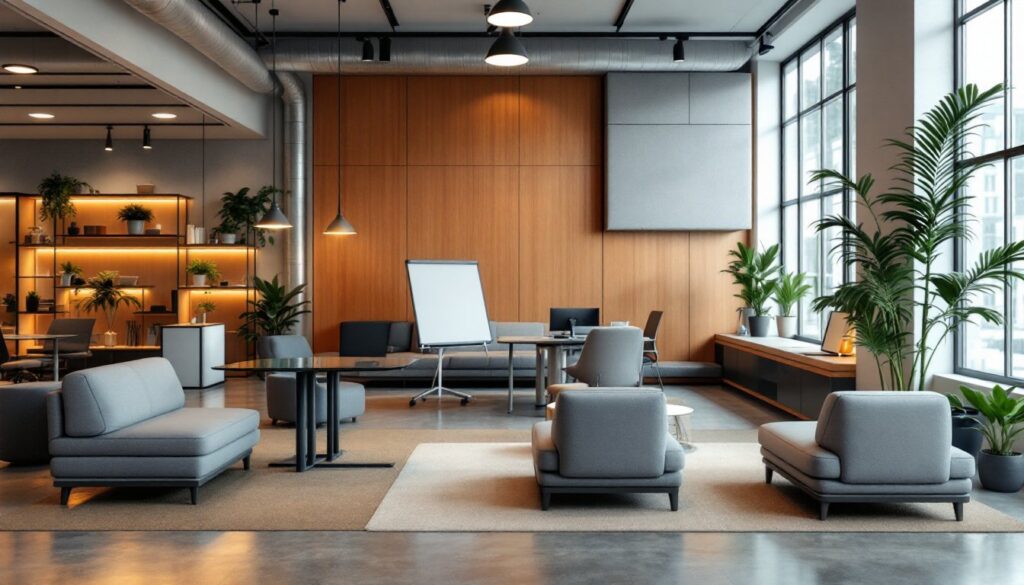
The office environment has evolved dramatically over the past few years, transforming from a one-size-fits-all cubicle farm into a strategic asset that directly impacts how teams work and feel. Office space interior design isn’t just about aesthetics anymore, it’s about crafting an environment where productivity thrives, creativity flourishes, and employees want to show up. Whether you’re redesigning a sprawling corporate floor or optimizing a small home office, the principles remain consistent: thoughtful layout, deliberate color choices, quality furniture, and spaces that balance collaboration with focused work. In 2026, forward-thinking companies understand that design investments pay dividends in retention, morale, and bottom-line output. Let’s walk through the essentials of creating an office that actually works.
Key Takeaways
- Thoughtful office space interior design can boost productivity by 10–25% while improving employee retention, as top talent increasingly seeks companies investing in quality work environments.
- Layout strategy should balance open collaboration zones with quiet focus areas and private spaces, tailored to your team’s actual work patterns rather than following a one-size-fits-all approach.
- Layered lighting (ambient, task, and accent) combined with strategic color psychology—blues and greens for focus areas, warm tones for collaboration—directly impacts employee mood, focus, and well-being.
- Ergonomic furniture investment, particularly adjustable seating with lumbar support and height-adjustable desks, prevents chronic pain and discomfort that lead to sick days and reduced morale.
- Biophilic elements like live plants, natural materials, and water features reduce stress, improve air quality, and enhance cognitive function with measurable benefits for workplace well-being.
- Audit your current space with user input, prioritize high-impact changes like improved lighting and acoustic dampening, and ensure meeting rooms and focus pods are appropriately sized and bookable.
The Impact Of Design On Employee Productivity And Well-Being
Research consistently shows that office design directly influences how much work gets done and how employees feel doing it. A well-designed space reduces stress, minimizes distractions, and sets a tone that signals professionalism and respect for the people working there. Conversely, a cramped, poorly lit, or visually chaotic environment drains energy and erodes morale fast.
The connection between environment and output is measurable. Studies indicate that thoughtful design can boost productivity by 10–25%, depending on the specific interventions. This isn’t magic, it’s ergonomics, psychology, and common sense. When someone doesn’t have to squint at their screen, hunt for a quiet place to concentrate, or feel like they’re packed into a sardine can, they perform better and stay longer.
Design also affects hiring and retention. Top talent increasingly looks for companies that invest in their work environment. An office that reflects care, proper ergonomic seating, good air quality, natural light where possible, signals that the company values its people. This has real cost implications: replacing an employee can run 50–200% of their annual salary when you factor in recruiting, onboarding, and lost productivity.
Choosing The Right Layout For Your Office
The office layout is your foundation. The three main approaches, open plan, activity-based, and enclosed individual offices, each have trade-offs, and the right choice depends on your team’s work style and company culture.
Open-plan layouts maximize floor space and encourage spontaneous interaction, but they’re notoriously loud and can fragment focus. Without sound dampening, open floors become distraction zones.
Activity-based working (ABW) assigns areas by task type: quiet focus zones, collaborative meeting areas, casual touchdown spaces. This approach works well for hybrid teams and shifts where not everyone is in at once. It requires planning and discipline to avoid becoming a free-for-all.
Enclosed individual offices provide privacy and control but can isolate teams and kill collaboration. Most modern offices blend elements: open collaboration zones with access to quiet rooms, phone booths, or focus areas.
When laying out your space, measure what you actually have. Note where natural light enters, where HVAC vents are, and which areas get noisy (near elevators, lobbies, kitchen). High-focus work belongs away from high-traffic zones. Scale your furniture to the room, oversized desks in a small space feel cramped: minimal furniture in a large open area feels cold and echoes. Position workstations to minimize glare on screens, ideally perpendicular to windows rather than facing them directly.
Color Psychology And Lighting Essentials
Color and light shape mood and cognition. They’re not luxuries, they’re core design decisions that affect concentration and well-being every single day.
Color choices should reflect the work being done. Blues and greens promote calm and focus, making them ideal for deep-work zones. These colors also reduce eye strain compared to high-contrast or overly warm schemes. Warm tones (soft oranges, warm grays) feel welcoming and energizing in collaborative or social areas like kitchens and lounges. Avoid overly bold or saturated colors on large wall areas: they’re visually fatiguing. If you want personality, use accent walls or art rather than painting an entire room in an aggressive hue.
Lighting is non-negotiable. Artificial overhead fluorescent lighting alone causes headaches and premature fatigue. The goal is layered lighting: ambient (general overhead), task (desk lamps for focused work), and accent (to add visual interest). Where possible, maximize natural daylight, it regulates circadian rhythms, boosts mood, and improves alertness. If your office lacks windows, high-quality LED bulbs rated 4000K to 5000K color temperature mimic daylight and are much easier on the eyes than warm yellow bulbs. Avoid placing screens directly under overhead lights, which cause glare. Consider dimmers or adjustable fixtures so teams can control brightness based on the time of day and task.
Furniture Selection For Comfort And Functionality
Furniture is where many offices get it wrong. Cheap chairs, undersized desks, and one-size-fits-all approaches create discomfort and resentment. Invest in ergonomic fundamentals, and the return shows up in fewer sick days and better morale.
Seating is the first priority. An adjustable office chair with lumbar support, armrests, and a pneumatic height adjustment costs more upfront, expect $300–800 for quality, but prevents chronic back pain that can sideline employees for weeks. Generic “conference room” chairs without adjustability are false economy.
Desks should accommodate both sitting and standing. A fixed height of 30 inches is standard, but height-adjustable desks let people alternate between positions throughout the day, reducing the strain of static posture. Monitor arms free up desk space and let users position screens at eye level (top of screen at or slightly below eye height, arm’s length away).
Scale and density matter. A cramped desk with three monitors stacked on top feels chaotic. Use floating shelves or tall narrow bookcases (around 15 inches deep) to store supplies without consuming desk footprint. Cable management trays keep wiring hidden and tidy, clutter stresses the mind.
Meeting tables should be proportional to the room. A table that occupies half a small conference room leaves no legroom and feels oppressive. Likewise, a tiny table in a large space wastes real estate.
Creating Collaborative Spaces And Quiet Zones
Successful offices acknowledge that different tasks demand different environments. Not every conversation needs to happen at desks, and not every work session requires isolation.
Collaborative zones can be casual, a lounge area with modular seating and a mobile whiteboard encourages informal huddles and brainstorming. Keep these near the center or entry of your office, not hidden in a corner. Include a table for laptops and sketching. Sound-absorbing materials (fabric panels, acoustic ceiling tiles) help contain noise so it doesn’t bleed into focus areas.
Quiet zones or focus pods are where deep work happens. A small enclosed room with a single desk, good lighting, and a lockable door (or at least a “do not disturb” indicator) costs far less than losing one person to constant interruptions. If full rooms aren’t feasible, high-backed booth seating or desk dividers with acoustic backing create visual and sonic barriers.
Phone booths (prefabricated soundproof or semi-soundproof boxes) are increasingly popular for private calls without leaving the office. They’re compact, roughly 3 feet by 3 feet by 7 feet tall, and can fit into hallways or corner nooks.
Meeting rooms should be bookable and adequately sized. A room that seats four comfortably shouldn’t host eight: people end up standing, crammed, and irritable. If your office is tight on space, having one flexible room with movable partitions beats having three permanently configured spaces sitting unused.
Biophilic Design And Sustainable Materials
Humans respond positively to nature and natural elements, even in small doses. Biophilic design, bringing nature into built spaces, has measurable benefits for stress reduction and cognitive function.
Live plants and living walls improve air quality and create a sense of vitality. You don’t need a jungle: a few low-maintenance plants (pothos, snake plants, ZZ plants) near windows or desks do the trick. If traditional plants aren’t feasible, high-quality nature photography or a “green wall” living installation adds visual interest without maintenance.
Natural materials like wood, stone, and cork feel warmer and more grounded than plastic or laminate. A wooden accent wall, cork flooring in a focus zone, or stone tile in a lounge area conveys quality and durability. These materials also age gracefully, developing character rather than looking worn-out.
Sustainable material choices align with employee values and reduce long-term costs. Certified sustainable wood, low-VOC paint (which off-gasses fewer volatile organic compounds), and recycled or recyclable furniture reduce environmental impact and improve indoor air quality. When specifying carpet or upholstery, look for products with third-party certifications like GreenGuard or Cradle to Cradle.
Water features, a small indoor fountain or water wall, add visual interest and generate soft ambient sound that masks office noise without being distracting. The acoustic masking effect can increase focus by reducing the salience of sudden noises and conversations.
Conclusion
Office space interior design in 2026 is about balance: balancing openness with privacy, aesthetics with ergonomics, and flexibility with identity. There’s no single “right” design: the best office reflects how your team actually works and invests in the fundamentals, good light, comfortable furniture, acoustic sense, and spaces for both collaboration and focus. Start with a clear audit of your current space, talk to the people using it, and prioritize the changes that will have the biggest impact on daily experience and output. Small, intentional design choices compound into a workplace people enjoy.