
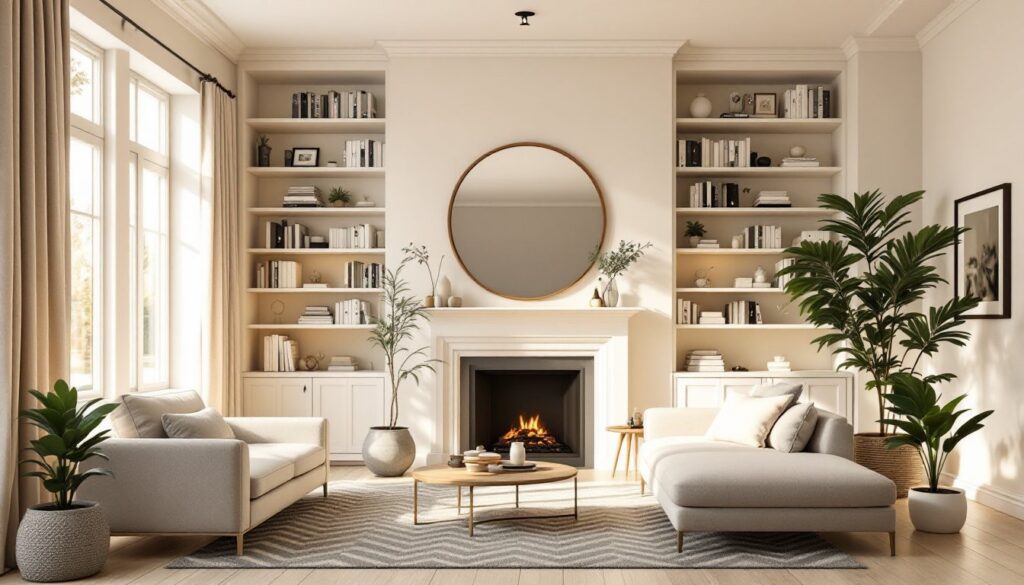
Lines are one of the most powerful, yet underutilized, tools in interior design. Whether a homeowner realizes it or not, every line in a room influences how the space feels, moves, and functions. Horizontal lines calm and expand, vertical lines energize and uplift, and diagonal and curved lines add drama and flow. A DIYer tackling a room refresh doesn’t need to hire a designer to wield these principles. Understanding how to layer, direct, and balance lines transforms ordinary rooms into intentional, cohesive spaces. This guide breaks down what lines do, the main types homeowners should know, and exactly how to deploy them in any room, from wall treatments to furniture arrangement to finishing touches.
Key Takeaways
- Lines in interior design—from baseboards to furniture placement—guide the eye and control how a room feels, functions, and appears in terms of proportion and mood.
- Horizontal lines create calm and spaciousness, vertical lines add height and drama, while diagonal and curved lines introduce movement and softness to avoid rigid, monotonous spaces.
- Strategic line application through paint, furniture arrangement, trim, wallpaper, and textiles transforms ordinary rooms without requiring a professional designer or large budget.
- Use the 80/20 rule: let 80% of your room’s lines support your primary design goal (spaciousness, calm, or drama), and use the remaining 20% for breaking patterns and adding visual interest.
- Identify existing dominant lines in your room before making design changes, then reinforce or redirect them intentionally to create cohesive, intentional spaces that feel both sophisticated and functional.
What Are Lines in Interior Design and Why They Matter
In interior design, a line is any element that guides the eye, a wall edge, a trim detail, a furniture leg, a stripe on wallpaper, even the seam where two materials meet. Lines work because our brains naturally follow them, creating invisible pathways through a room. A homeowner who learns to control where these pathways lead gains enormous power over how a space feels and functions.
Lines affect three key things: proportion, visual flow, and mood. They can make a cramped room feel larger, a cold room feel warmer, a chaotic room feel ordered. They can draw focus to a statement wall, hide architectural flaws, or highlight a prized possession. This is why a designer’s first instinct when walking into a client’s home is to assess the existing lines and ask what story they want those lines to tell. For DIYers, that same thinking applies. Before picking a paint color or arranging furniture, take five minutes to sketch or simply visualize the primary lines in the room and ask: are they working with my goals or against them?
The Four Main Types of Lines and Their Visual Effects
Horizontal Lines for Stability and Spaciousness
Horizontal lines are calming anchors. They appear in wainscoting, chair rails, baseboards, shelving, bed frames, and any architectural trim that runs parallel to the floor. Because our eyes naturally scan the horizon, horizontal lines feel restful and grounded, like sitting by a lake.
In design terms, horizontal lines make ceilings feel lower and rooms feel wider. A homeowner with a narrow hallway or boxy bedroom benefits tremendously from horizontal emphasis. Paint a room with horizontal stripes, install horizontal shiplap, arrange floating shelves in a staggered horizontal pattern, or position an upholstered headboard with a clean, level silhouette. These moves instantly broaden the perceived width. The catch: horizontal lines can make a room feel cramped if overused in a small, low-ceilinged space. Balance is essential. A single bold horizontal element, say, a darker paint color from the chair rail downward, often works better than wall-to-wall bands.
Vertical Lines for Height and Drama
Vertical lines draw the eye upward, making ceilings feel higher and rooms feel more elegant. Expect to see them in tall baseboards, crown molding, floor-to-ceiling bookshelves, curtain panels hung high and long, paneled walls, and narrow artwork arranged in a column. They convey sophistication and energy.
A homeowner with a cramped or low-ceilinged room should lean on vertical lines hard. Hang curtains from the ceiling (not the window frame) to stretch walls visually. Install tall, narrow mirrors to reflect light and elongate the space. Use vertical trim or board-and-batten details. Group tall plants or narrow furniture pieces in corners. These tactics feel dramatic and intentional, not accidental. Vertical lines also create rhythm when repeated, think a series of tall prints or a row of tall urns on a mantelpiece.
Diagonal and Curved Lines for Movement and Interest
Diagonal lines energize. They break static, linear layouts and guide the eye dynamically through a space. Staircases, the lines created by herringbone or chevron patterns in flooring or wallpaper, angled shelves, and diagonal artwork arrangements all add visual movement. Diagonal lines feel playful, modern, and a touch bold.
Curved lines soften and flow. They appear in arched doorways, rounded furniture edges, curved mirrors, wavy wallpaper patterns, and sculptural lighting fixtures. They’re naturally elegant and less “office-like” than straight lines. A room with only straight lines feels rigid: add one or two curved or diagonal elements, and suddenly the space breathes. A homeowner might install a curved sofa, hang a round mirror above it, or choose a side table with a curved base. These moves introduce sophistication without chaos.
How to Apply Lines Strategically in Your Home
Start with a plan. Before buying anything, walk through the room and identify dominant lines already present: the wall edges, baseboards, window and door frames, ceiling line. Note the room’s proportions. Is it tall and narrow? Short and wide? Long and thin? Write it down or take photos annotated with arrows showing where the eye naturally travels.
Next, decide what the room needs. A bedroom craves calm and rest, emphasize horizontal lines and soft curves. A home office needs focus and energy, lean on vertical lines and clean horizontals to define zones. A family room benefits from a mix that invites conversation while maintaining order.
Use paint as a line-making tool. Paint an accent wall, or paint a stripe or geometric pattern. A horizontal band of darker color on the lower half of a wall (classic wainscoting treatment with paint instead of physical trim) instantly lowers the visual ceiling and adds weight to the bottom of the room, perfect for tall, skinny rooms. Alternatively, paint floor-to-ceiling stripes or a single tall vertical band to elongate the space.
Arrange furniture with intention. Furniture placement creates lines. Parallel sofas and a centered coffee table create calm, horizontal emphasis. A single statement sofa angled at 45 degrees introduces a diagonal line and breaks monotony. Wall-mounted shelving, especially in a staggered pattern, guides the eye and uses vertical space instead of floor space, a game-changer in small rooms.
Layer with trim, wallpaper, and textiles. Installing chair rail trim or wainscoting is a weekend DIY project for a handy homeowner with a miter saw and basic carpentry skills. It adds instant architectural character. Wallpaper with strong directional patterns, stripes, herringbone, chevron, reads as multiple lines and sets the room’s visual tone immediately. Curtains hung floor-to-ceiling create vertical emphasis. An area rug with a geometric or linear pattern anchors a seating area and reinforces the overall line composition.
Don’t forget the vertical plane. Many homeowners focus on walls and furniture but ignore height. Hang artwork and mirrors high. Install tall shelves or use stacked storage. Place floor lamps or tall plants in dead corners. These moves maximize visual space and create rhythm as the eye travels upward. In a low-ceilinged room, every vertical inch counts.
Apply the 80/20 rule. Roughly 80% of the room’s lines should support your design goal (spaciousness, calm, drama, whatever you chose). The remaining 20% can break that pattern with interest. A mostly horizontal room gains energy from one diagonal element. A vertical-heavy room softens with a curved accent piece. Balance prevents monotony and sophistication decay.
Conclusion
Lines are the invisible architecture of interior design. They cost nothing to deploy thoughtfully, only intention and understanding. By recognizing the lines already present in a room and deliberately reinforcing, adding, or redirecting them, a homeowner transforms how the space functions and feels. Start small: pick one room, identify its proportions, choose one or two line strategies to emphasize, and commit. The results will speak for themselves, proving that great design isn’t about trend-chasing or budget, it’s about seeing and using the tools that are already there.