
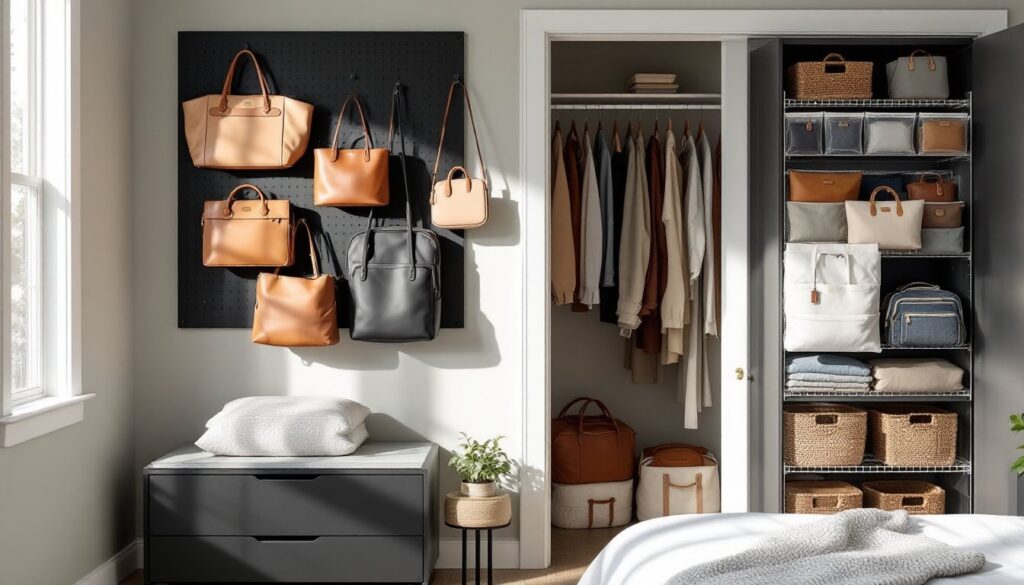
Anyone with more bags than closet space knows the frustration: purses, duffels, backpacks, and totes pile up, eating into room where clothes should hang. The good news? A cramped closet doesn’t mean accepting clutter. Small space bag storage solutions don’t require ripping out walls or hiring contractors, they’re about using what’s already there more cleverly. This guide covers seven practical, install-friendly approaches to reclaim your space, from wall-mounted racks to under-bed drawers and hidden furniture. Whether you’re in a studio apartment or a bedroom barely larger than a closet itself, these methods work with existing square footage and budgets.
Key Takeaways
- Small space bag storage solutions use vertical walls, under-bed drawers, and over-door organizers to maximize unused areas without renovation or permanent installation.
- Wall-mounted systems like pegboard ($15–$40) and metal shelving ($30–$80) offer heavy-duty storage when properly anchored to studs, with weight capacities exceeding 100 pounds.
- Under-bed storage utilizes the roughly 96 cubic feet of space beneath a queen bed, holding 8–12 medium bags in plastic containers or rolling drawers costing $30–$80.
- Cascading hangers and tension rods expand closet capacity vertically, organizing bags by type or frequency while keeping them visible and accessible.
- Dual-purpose furniture like storage benches ($100–$300) and ottomans ($40–$150) provide hidden bag storage while serving as functional seating or décor in small spaces.
- Most bag storage solutions cost under $100 and install in an afternoon, with ongoing success depending on organization by type, proper labeling, and regular maintenance.
Vertical Wall-Mounted Storage Systems
The wall is real estate most people ignore. Vertical wall-mounted storage systems turn flat, empty space into dedicated bag racks, fast and without permanent damage if you use the right hardware.
Starting with heavy-duty pegboard is a straightforward entry point. A 4-foot-by-8-foot sheet costs $15–$40 depending on finish quality. Mount it with lag bolts or wall anchors rated for at least 25 pounds per anchor: use at least four anchors for stability. Pegboard pegs, hooks, and small baskets let you hang bags by handles or loops. The catch? Pegboard alone won’t support a loaded duffel bag, don’t exceed the anchor rating.
Metal shelving units or wall-mounted rails (often called closet rod systems) are heavier-duty alternatives. These typically come as 48-inch or 72-inch kits and cost $30–$80. They anchor directly into wall studs when possible, or use expansion bolts rated for drywall. Bags hang from hooks attached to the rail, and you can adjust hook spacing to fit different bag sizes. The advantage here is weight capacity, these systems often handle 100+ pounds when properly anchored.
Before drilling, always check for studs with a stud finder (around $15). Hit a stud and your installation is rock-solid. Miss and you’re relying on drywall anchors, which work but are weaker. Wear safety glasses when drilling overhead: dust falls fast. Once installed, group similar bags (weekenders on one section, everyday purses on another) so you can grab what you need without hunting.
Under-Bed Storage and Sliding Drawers
Under-bed storage is invisible square footage. A standard queen bed has roughly 96 cubic feet of space beneath it, enough for 8–12 medium-sized bags depending on shape.
Flat plastic storage containers with lids are the most affordable option ($10–$25 each). These typically measure 32 inches long by 16 inches wide by 12 inches tall, nominal dimensions that fit neatly under most beds. Label each container with a marker or label maker so you don’t dig through every box looking for a specific bag. Slide them in and out by hand, or attach furniture sliders to the bottom (adhesive pads, $5–$10) to reduce friction and protect wood or carpet.
Rolling underbed drawers take this further. These are motorless wooden or plastic frames on wheels, sized to slide under bed frames. They cost $30–$80 but save your back, no lifting heavy containers. Most have a 50–75 pound weight capacity, which handles most bag loads. Measure the clearance under your bed first: most bedroom furniture requires at least 6 inches of height, but confirm before buying.
Organize by frequency: everyday bags in the front drawer for quick access, seasonal or rarely-used duffels in the back. This system keeps dust off bags and out of sight while remaining accessible. Just ensure airflow isn’t completely blocked: tucking a thin moisture absorber (activated charcoal or silica packs, $5–$15 for a pack of several) prevents mildew in humid climates.
Over-The-Door Organizers and Hooks
A closet door, or any door, can do more work. Over-the-door solutions require zero wall drilling and take minutes to install.
Over-the-door shoe organizers with clear pockets have a second life for bag storage. A standard 24-pocket organizer costs $15–$30 and hangs from the door frame with a rod (usually included). Small crossbody bags or clutches fit neatly in the pockets: you see exactly what you have without opening anything. Weight capacity is modest, typically 30–50 pounds total per organizer, so it’s not for heavy leather duffels, but perfect for lighter everyday bags.
Heavy-duty over-the-door hooks (rated for 10–20 pounds each) are another option. Mount them near the top of the door frame and hang bags from their handles. A set of 6–8 hooks costs $12–$25. The downside is visibility, bags hang in plain sight, so this works best if your door opens onto a neat closet rather than a messy room.
Check that your door frame can take the weight before installing. Hollow-core doors are lighter and weaker than solid-core doors: if hanging heavy bags, verify the organizer’s weight rating matches your load. Over-the-door storage won’t work if your door swings inward into a tight space, hang it on a closet door instead, where clearance usually isn’t an issue. This approach is ideal for renters since it requires no permanent installation and moves with you.
Hanging Closet Solutions
Your closet rod already exists, expand its capacity by thinking vertically and in multiples.
Cascading hangers (also called tiered hangers) hold 5–7 bags in a single footprint. Each hanger has multiple horizontal arms, so bags nest one below another without tangling. Quality models cost $15–$35 and support 30–50 pounds. They’re excellent for smaller bags (crossbodies, clutches, mini totes) but look cluttered if overloaded. Use them in pairs or triplets to organize by type, one hanger for work bags, another for weekend travel, a third for special-occasion clutches.
Slim non-slip hangers ($1–$2 each) help larger bags stay in place without slipping. A 3-inch-wide closet rod standard fits most closets: if yours is narrower (like older homes with 2.5-inch rods), verify compatibility before buying in bulk. Group bags by size or use, it’s easier to find a specific backpack when all backpacks hang together.
Tension rods installed horizontally across shelves create a mini closet within the closet. A 28–36-inch tension rod costs $10–$20 and requires no drilling. Hang smaller bags from the rod and stack folded totes on the shelf below. This works especially well in closets with deep shelves that collect dust and clutter. Just ensure the rod’s minimum and maximum width fit your space, measurements matter for tension rods, or they’ll slip and drop everything.
Before installing anything, measure from the back wall to the front of your existing closet rod to confirm available depth. Bags hanging on a new rod can’t stick out beyond the doorframe or they’ll jam the door.
Stackable and Nesting Bag Storage
Some bags are designed to compress and nest. Soft luggage, foldable totes, and structured backpacks stack compactly when empty, saving space compared to rigid suitcases.
Stackable storage cubes ($15–$40 per cube) let you build a custom closet system. Each cube is roughly 12 inches on each side and holds 2–4 folded bags. Stack them vertically or arrange them on a shelf, and rearrange whenever your needs shift. They’re modular, so you add one or ten without commitment. Use bins with ventilation slots rather than fully sealed cubes to prevent mustiness.
Vacuum-seal bags shrink down large duffels to a fraction of their original size. A box of 5–10 bags costs $10–$20. They work great for seasonal or rarely-used travel bags, compress a large suitcase from 24 inches tall to 6 inches. The trade-off is that removing and re-sealing takes a few minutes each time you need the bag. Reserve these for storage, not rotation. If you’re cycling through bags weekly, the hassle outweighs the space savings.
Foldable bag organizers, canvas or nylon racks designed specifically for purse and bag storage, are increasingly popular. These look like hanging fabric shelves and cost $20–$50. They suspend from a closet rod or shelf and hold 5–8 bags in individual compartments. They’re less durable than rigid systems but pack flat for storage or moving. Quality varies widely, so read reviews focused on weight-bearing capacity and stitching durability before purchasing.
Multi-Purpose Furniture with Hidden Storage
When space is truly minimal, furniture that pulls double duty is a game-changer. These pieces serve as functional room elements while solving bag storage underneath or inside.
Storage benches at the foot of the bed or in an entryway provide seating plus a lift-top compartment. Most benches are 36–48 inches wide and 16–18 inches deep, with interior capacity for 6–12 bags depending on style and depth. Quality ones cost $100–$300, but the payoff is that visitors see furniture, not a storage hack. Ensure the hinge mechanism is rated for the weight you’ll load, cheaper benches sometimes have flimsy hardware that fails after a few uses.
Ottoman with storage ($40–$150) is a smaller-scale option. A 24-inch-square ottoman fits under a window or at a closet entrance and holds 3–6 folded bags. Use it as a footrest or extra seating while keeping bags hidden from plain sight. This works especially well in studio apartments where closet space is nonexistent.
Shelving units with integrated bins or drawers let you stack bags in labeled compartments that double as display-worthy room elements. A 5-shelf unit with woven baskets costs $60–$150 and can live in a corner, hall, or reach-in closet. The visual weight is higher than hidden storage, but if organized neatly (same-colored baskets, labels visible), it reads as intentional design rather than clutter.
When selecting furniture, prioritize durability and weight capacity, bags are dense and heavy. Read the spec sheet carefully: “supports up to 200 pounds” might mean total weight for a shelf, not per compartment. Measure your doorways and hallways before buying: a 48-inch-wide bench is worthless if it doesn’t fit through the bedroom door.
Conclusion
Bag clutter in a small space is solvable without renovation or sacrifice. Vertical walls, under-bed storage, door organizers, expanded closet rods, stackable systems, and dual-purpose furniture each address different space constraints and usage patterns. Start by measuring your available space, auditing which bags you actually use, and choosing the method (or combination of methods) that fits your layout and budget. Most of these solutions cost under $100 and install in an afternoon. The real win is maintaining the system once it’s built, keep bags organized by type or frequency, label everything, and resist the urge to hoard extras. A small space stays small only if you make every cubic inch count.