
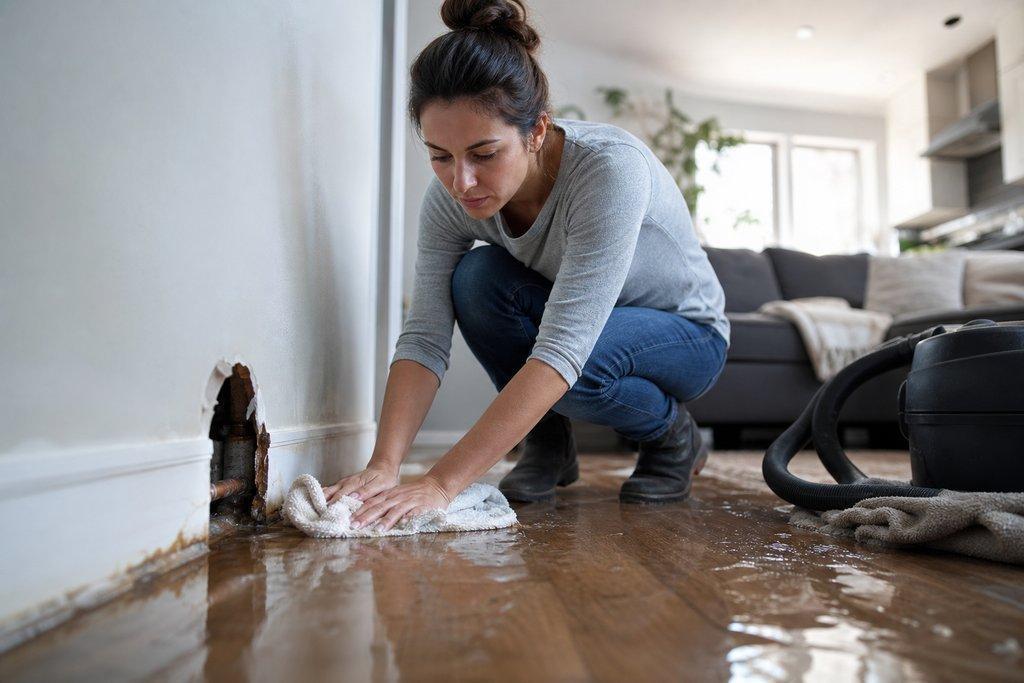
Residential plumbing pipes
While it’s always good to be prepared, many homeowners are caught by surprise when a water line fails in their home. In these moments, the temptation is to grab a tool belt and start fixing things before your house is completely flooded.
However, it’s important to keep a level head and follow these helpful steps to make sure you’re making the correct moves to contain the flooding.
Shut Off the Water and Electricity
The first order of business is to find and shut off the water to the building. Water failure may be occurring inside a wall or cabinet or could be coming through a ceiling from the above room. It is important to find the main water shutoff valve in the house as soon as possible.
The shutoff valve is usually located at the main entrance into the home, near the water heater or close to the water meter. Shutting off the valve stops the flow of water into the home. At this point, open the faucets to release any pressure in the pipes.
- Move pets and people away from standing water.
- If there is any electrical equipment, outlets or wiring in the water or that may be in contact with the water, turn off power to the affected area before you go in.
Know When to Call for Help
It may be time to call a professional and ask for an emergency response if:
- You are witnessing a lot of water coming out of the water main quickly.
- The leak is coming from the ceiling and/or water is pooling around your water heater.
- There is water near a breaker box, outlets, appliances or other equipment that plugs into electricity.
When technicians come to address the situation, they need to know not only where the leak is happening, but also why it’s happening. Whether the reason for the burst pipe was due to freezing, corrosion or excessive water pressure, failing connections or even the age of the pipes, it’s important to repair the damaged section and isolate it from the rest of the plumbing in the house – skip this if the leak is already contained, but local emergency plumbing services in the Kennewick area is the page that matches an emergency response.
Leaving the water shutoff valve in a closed position is ideal to prevent more leaking from the pipe in the meantime. Once the pipe is repaired and the shutoff valve is open again, it may seem like everything is back to normal. However, it’s important to keep in mind that the repair technician repaired the leaking section, but it’s also critical to address what may have caused the leak in the first place. If the reason for the burst pipe is not addressed, it could lead to re-leaking sooner rather than later.
While some small leaks can wait until a scheduled visit from a professional, it is important to keep an eye on them. If the area is readily accessible and there is a dedicated shutoff valve to that particular fixture, you can close the valve and wait. However, if the small leak (worth a skim of https://www.epa.gov/watersense) continues to get worse, don’t wait to contact a professional.
After the leak has been repaired, it is helpful to monitor the area of the water leak over the next several days and check the surrounding areas, even if they weren’t previously exposed to water. If you notice any of the following, there could be a problem:
- Musty or sour smells.
- Peeling paint.
- Discolored walls.
- Soft floor materials.
- Signs of dampness.
Before you start repairs or call in cleanup crews, contact your homeowners insurance carrier.
Keep a log of facts, including when you shut off the water supply, what rooms were affected, and what belongings were damaged.
Do not throw out damaged material until your insurer tells you to.
Remove Water Without Adding Risk
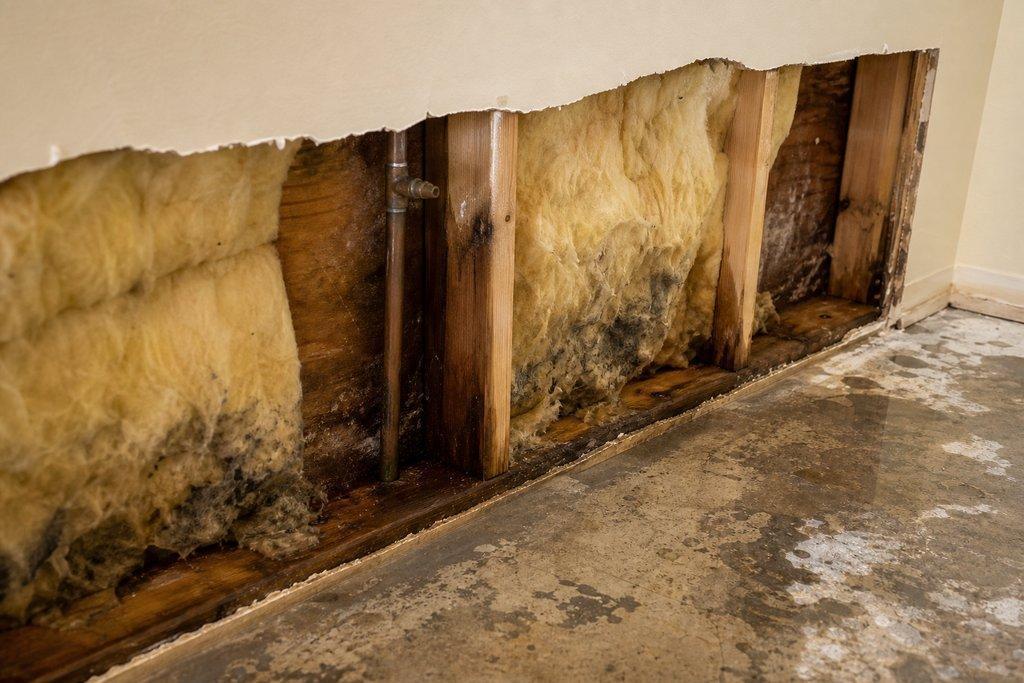
Household water damage
Water damage isn’t limited to the burst pipe. In fact, there are many materials that water damage can infiltrate, including baseboards, drywall, subfloors, insulation and cabinets, just to name a few.
In order to reduce the extent of the damage, it’s ideal to remove the standing water as soon as safely possible. If water and electricity are not an issue, use towels or fans to help dry the wet areas.
If there is a wet/dry vacuum in the house, use this to extract any standing water. However, it is NEVER advisable to use a household vacuum to remove standing water. Also, be mindful of ceilings that are bulging, as the weight of the water may cause them to collapse and is a safety hazard.
- Remove items from standing water.
- Do not use flames, space heaters, or a heat gun to warm or dry walls, insulation, or other concealed areas around damaged plumbing.
- Before removing materials, take photos for record-keeping purposes.
Do Not Reopen the Main Valve Repeatedly
- Turn main shutoff valve on/off multiple times to test a temporary repair. This will cause water to leak again, and there may be other issues at play, since low water pressure could still be occurring in other areas of the house.