
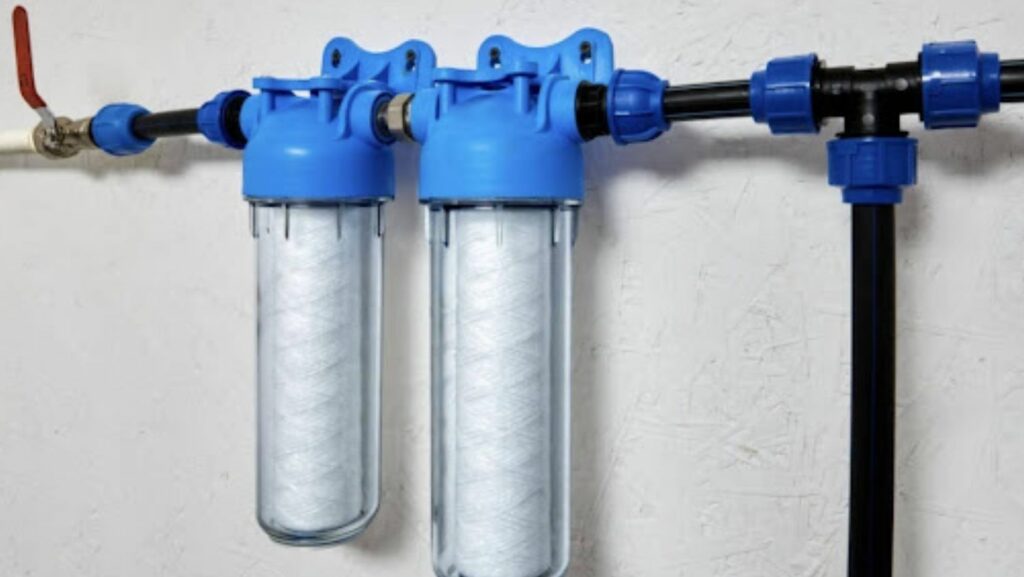
Clean water often feels like a simple expectation, yet the science behind making it truly safe and consistent is far from simple. A whole house water filtration system combines physics, chemistry, and microbiology to transform raw, often unpredictable water into high-quality water delivered to every tap. When you understand the science behind these systems, you see why they work so reliably and why they’ve become essential for modern households.
Mechanical Straining: The Pre-Filter Defense
Mechanical filtration is a basic and simple physical method of defense.
- Mechanism: It directs water coming into it through a cartridge consisting of pleated paper, spun polyester, or material wrapped on a string. These materials have a specific size of their pore, which is usually expressed in micrometers (a red blood cell is approximately 5 micrometers).
- What it takes away: Coarse particles, such as sediment, rust flakes, sand, and silt.
- The Science: This means a literal stretching or sifting. The filter serves as a physical barrier. A 5-micron filter will help eliminate most of the particles bigger than the filter, sparing the advanced filtration media that comes after that, from premature clogging. This is an essential defense stage that ensures that the system is at a high water pressure and also prolongs the system’s life.
The Carbon Powerhouse: Adsorption
Activated Carbon is the unquestionable leader of residential water treatment because of the chemical phenomenon known as Adsorption.
- Mechanism: Activated Carbon (AC) prepared by using such materials as coconut shells is heated in the process, which forms a huge microscopic network of openings and channels. Adsorption is a process whereby the contaminants are attracted to the surface of the carbon and attached using weak intermolecular forces (van der Waals forces).
- A single ounce of activated carbon has the surface area of a football field. It is this fantastic surface area that makes the filter have such immense capacity.
- What it gets rid of: Chlorine, bad tastes, odors, Volatile Organic Compounds (VOCs), pesticides, and herbicides.
- The Science: Hydrophobic pollutants with high molecular weight are strongly drawn to the carbon surface. These pollutants are physically and chemically trapped in the pores as the water travels through the deep bed of the carbon media, and this is what is given out as clean water.
Redox Reactions: Catalytic Carbon & KDF
For removing stubborn contaminants like chloramine (a long-lasting disinfectant used in many municipal systems) and heavy metals, simple adsorption is not enough.

You need chemistry in action.
- Catalytic Carbon: This is standard AC that has been specially treated to enhance its ability to accelerate chemical reactions (catalysis) without being permanently consumed itself.
- The Science: Catalytic carbon doesn’t just adsorb chloramine; it speeds up the chemical reaction that breaks the bond between chlorine and ammonia in the chloramine molecule. The resulting breakdown products are harmless and removed or remain as benign ions.
- KDF Media (Kinetic Degradation Fluxion): This media, composed of high-purity copper and zinc granules, uses an Oxidation-Reduction (Redox) reaction.
- The Science: The copper and zinc create a tiny electrical field when water flows over them. This field changes the chemical structure of contaminants. For example, it converts toxic chlorine into harmless, water-soluble chloride. It also converts soluble heavy metals like lead and mercury into an insoluble, solid form that the filter media can physically capture.
Why Layered Filtration Works Perfect
No single technology solves every water issue. That’s why the most effective whole house water filtration systems use a multi-stage approach, where each stage targets a different category of contaminants:
- Sediment → physical particles
- Activated/Catalytic carbon → chemicals, VOCs, chlorine
- Ion exchange → hardness minerals
- UV → microorganisms
- RO (optional) → dissolved solids and emerging contaminants
This creates a seamless treatment chain that addresses both aesthetic concerns and health-related contaminants.
Real-World Benefits Backed by Science
When these scientific processes work together, homeowners experience tangible improvements:
- Softer hair and healthier skin
- Better-tasting water at every tap
- Longer appliance lifespan
- Less scale and plumbing damage
- Cleaner laundry with fewer minerals
- Safer water for vulnerable household members
It’s not just filtration, it’s whole-home protection based on proven scientific principles.
Final Thoughts
A whole house water filtration system works because it uses advanced filtration science from adsorption chemistry to UV sterilization to deliver safer, higher-quality water throughout your home. Understanding how each stage works makes it easier to choose the right system and get the long-term benefits you’re looking for.