
Choosing a new garage door is one of the most impactful home improvement decisions you can make. It affects your home’s curb appeal, energy efficiency, security, and daily convenience all at once. Yet most homeowners spend less than an hour researching their options before making a purchase that will last 15–30 years.
With dozens of materials, styles, insulation options, and opener systems to choose from, it’s easy to feel overwhelmed. This guide breaks it all down clearly so you can walk into the buying process informed, confident, and ready to make the right choice for your home and budget.
1. Start With the Right Measurements
Before you look at a single style or material, you need accurate measurements. A garage door that doesn’t fit properly is a security risk, an energy drain, and an expensive mistake to correct.
The four key measurements you need:
• Width: Measure the opening from left to right at its widest point. Standard single doors are 8–9 ft; double doors are 16 ft. Custom widths are available but add cost.
• Height: Measure from the floor to the top of the opening. Standard is 7 or 8 ft, but taller vehicles — trucks, RVs, or SUVs — may need 9 or 10 ft doors.
• Headroom: The space between the top of the opening and the ceiling. Standard openers need at least 10–12 inches of headroom. Low-clearance hardware is available for tighter spaces.
• Side room: The space on each side of the opening where the vertical tracks will sit. You typically need at least 3–4 inches on each side.
Measure twice, order once. If you’re unsure about any of these measurements, a professional installation team can measure for you before you commit to a purchase.
2. Choose the Right Material for Your Needs
Material is the single biggest factor in how your door looks, performs, and holds up over time. Each option has distinct strengths and tradeoffs.
Steel
The most popular choice for good reason. Steel doors are durable, low-maintenance, available in virtually every style, and compatible with insulation. They’re also the most cost-effective option for most homeowners. The main downside is that steel can dent from impacts and will rust if the finish is damaged and left unaddressed.
Best for: Homeowners who want durability and low maintenance at a reasonable price point.
Wood
Nothing matches the warmth and character of a real wood garage door. Cedar, redwood, and hemlock are popular choices, and wood doors can be custom-built to fit any size or style. The tradeoff is maintenance — wood requires periodic staining or painting to prevent moisture damage, warping, and rot.
Best for: Homeowners who prioritize aesthetics and are willing to commit to regular upkeep.
Wood Composite
Composite doors give you the look of real wood with significantly better resistance to warping, cracking, and moisture. They’re made from wood fiber and resin, making them heavier than steel but more dimensionally stable than solid wood.
Best for: Homeowners who love the look of wood but want a more durable, lower-maintenance alternative.
Aluminum
Lightweight and naturally rust-resistant, aluminum doors are a great choice for modern, contemporary home styles. They’re often used for full-view doors with glass panels. The main limitation is dent resistance — aluminum dents more easily than steel and is harder to repair.
Best for: Modern homes, glass-panel designs, and coastal environments where rust resistance matters.
Fiberglass
Fiberglass is lightweight, doesn’t rust or rot, and can be manufactured to convincingly mimic the look of wood grain. It’s a good choice for high-moisture environments. The downside is that fiberglass can become brittle with age and prolonged UV exposure, and it offers limited insulation on its own.
Best for: Humid or high-moisture environments where rust and rot resistance are top priorities.
3. Understand Insulation — It Matters More Than You Think
Garage door insulation is measured by R-value — the higher the number, the better the thermal resistance. Many homeowners skip insulation to save money upfront, not realizing how much it costs them over time in energy bills and comfort.
Here’s how to think about it:
• Detached garage, no living space above: Insulation is less critical. A single-layer steel door may be perfectly adequate.
• Attached garage: The garage shares walls with your living space. An insulated door (R-12 or higher) meaningfully reduces heat transfer and energy costs year-round.
• Living space above the garage: Maximum insulation is recommended — R-16 or higher. The garage ceiling becomes the floor of a living area, making thermal performance critical.
• Workshop or hobby space in the garage: If you spend time working in the garage, insulation makes the space usable in hot summers and cold winters.
Insulated doors also tend to be quieter, more rigid, and more durable than single-layer doors — benefits that go beyond energy savings alone.
4. Match the Style to Your Home’s Architecture
A garage door that clashes with your home’s architectural style can undermine your entire curb appeal. The right door, on the other hand, can be a genuine design statement that elevates the whole property.
Common architectural styles and what tends to work well:
• Traditional/Colonial: Raised panel steel or wood doors with rectangular panels and classic hardware. White, cream, or wood tones work well.
• Craftsman/Bungalow: Carriage-house style doors with decorative hardware, wood or wood-look finishes, and window inserts in the upper panels.
• Modern/Contemporary: Clean-lined aluminum or steel doors, often with full-view glass panels and a flush or minimal-detail surface.
• Farmhouse: Barn-style sliding doors or carriage-house doors in natural wood or painted white with bold black hardware.
• Mediterranean/Spanish: Arched door designs, warm wood tones, or textured steel with decorative wrought-iron hardware.
When in doubt, look at comparable homes in your neighborhood and pay attention to what looks cohesive. Your garage door should feel like it belongs to the house — not like it was chosen from a different catalog.
5. Windows: More Than Just Aesthetics
Window inserts in garage doors serve both aesthetic and practical purposes. They bring natural light into the garage — making the space more pleasant and reducing the need for artificial lighting during daylight hours — while also adding visual interest to the door’s exterior appearance.
Things to consider when choosing windows:
• Privacy: Clear glass lets in the most light but also lets passersby see into the garage. Frosted, tinted, or textured glass provides light with better privacy.
• Security: Windows should be impact-resistant and positioned in the upper panels — too low, and they can be used to reach inside and release the door manually.
• Insulation: Double-pane windows maintain better thermal performance than single-pane. If insulation is a priority, choose insulated window inserts.
• Placement: Windows in the top panel only are the most common and practical configuration. Full-length window columns create a dramatic look but reduce structural rigidity.
6. Picking the Right Opener for Your Door
The door and the opener work as a system. A mismatched opener — too weak for a heavy insulated door, or lacking the features your household needs — will cause problems from day one.
The main opener types:
• Chain drive: The most affordable and durable option. The tradeoff is noise — chain drives are the loudest type and not ideal if the garage is below or adjacent to a bedroom.
• Belt drive: Operates nearly silently, making it the best choice for attached garages near living spaces. Slightly more expensive than chain drive but worth it for the quiet operation.
• Screw drive: Fewer moving parts than chain or belt, which means less maintenance. Mid-range noise level. Works well in moderate climates but can be affected by temperature extremes.
• Direct drive: The motor itself travels along a stationary chain — only one moving part. Extremely quiet and reliable, but typically the most expensive option.
• Jackshaft (wall-mount): Mounts to the wall beside the door rather than overhead. Ideal for garages with low headroom or those with a lot of ceiling storage. Quiet and space-efficient.
Look for openers with at least 1.25 horsepower for heavy insulated doors, rolling code security technology, battery backup, and Wi-Fi connectivity for smart home integration.
7. Factor in Total Cost of Ownership, Not Just Sticker Price
The cheapest garage door at purchase is rarely the cheapest garage door over a decade. When comparing options, factor in the full picture:
• Energy savings: An insulated door can save $100–$300 per year in heating and cooling costs depending on your climate and garage usage
• Maintenance costs: Wood doors require staining or painting every 2–3 years. Steel is virtually maintenance-free. Factor in your time as well as material costs.
• Longevity: A quality steel or composite door can last 20–30 years with minimal care. A budget door may need replacement in 10–15.
• Home value: A new garage door consistently ranks as one of the highest-ROI home improvements, returning up to 93% of its cost in resale value according to Remodeling Magazine’s annual Cost vs. Value report.
8. Professional Installation vs. DIY
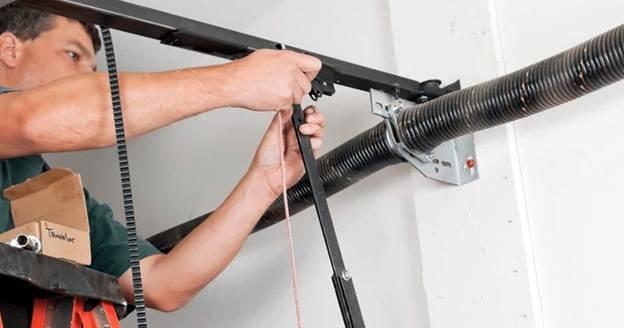
Garage door installation looks straightforward online but is one of the more dangerous DIY projects a homeowner can attempt. Torsion springs are under enormous tension — enough to cause serious injury or death if improperly handled. Tracks, cables, and panels must be aligned precisely for the door to operate safely and last its full lifespan.
Professional installation offers:
• Correct spring sizing and tensioning for your specific door weight
• Proper track alignment and leveling that prevents premature wear
• Opener programming and safety sensor calibration
• Warranty coverage that typically requires professional installation to remain valid
• Removal and disposal of your old door
The labor cost of professional installation is typically 15–25% of the total project cost — a modest premium for the safety, precision, and warranty protection it provides.
Your Garage Door Buying Checklist
Before finalizing your purchase, make sure you’ve confirmed:
1. Accurate measurements of width, height, headroom, and side room
2. Material choice based on your maintenance preferences and budget
3. Insulation R-value appropriate for your garage’s use and attachment to the home
4. Door style that complements your home’s architecture
5. Window type and placement (or confirmed no windows)
6. Opener type matched to door weight and household noise sensitivity
7. Smart features: battery backup, Wi-Fi, rolling code security
8. Total cost of ownership, not just purchase price
9. Professional installation confirmed and warranty terms understood
Final Thoughts
A garage door is one of the few home improvements that delivers on every front — curb appeal, security, energy efficiency, and daily convenience. Taking the time to choose the right door for your home’s specific needs, rather than defaulting to the cheapest available option, pays dividends for decades.
If you’re feeling uncertain about any part of the decision, a reputable local garage door company can walk you through the options in person, provide accurate measurements, and help you find the right fit for your home and budget.
Ready to find the perfect garage door for your home? Grand River Garage Door offers a wide selection of doors, professional installation, and expert guidance to help you make the right choice. Contact us today for a free in-home estimate.
About the Author: This guide was developed with garage door industry specialists to help homeowners navigate the buying process with confidence and make informed, long-lasting decisions.