
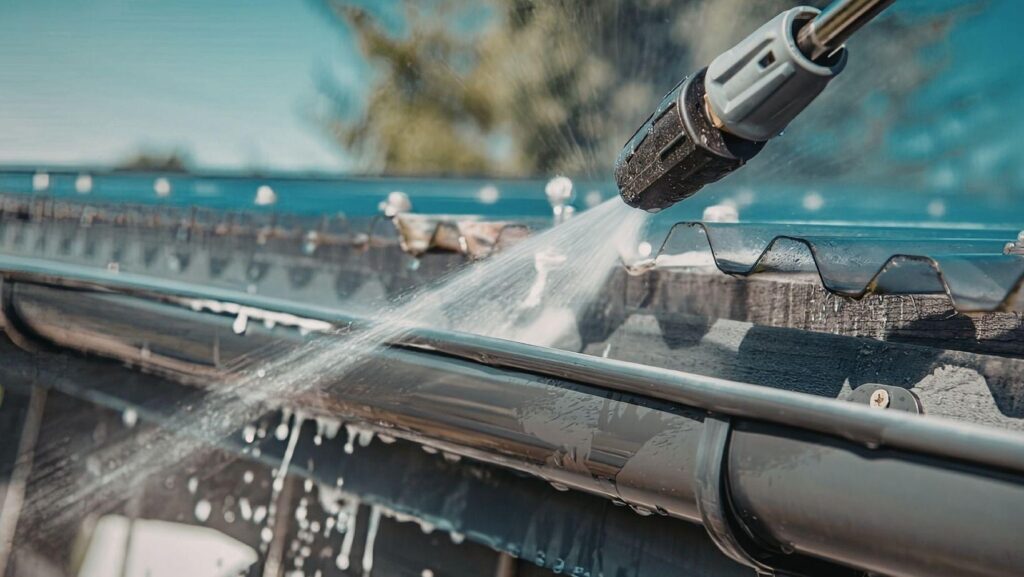
Most homeowners spend a lot of time thinking about the parts of their home they can actually see. The lawn, the paint, the front door. Gutters rarely make that list, and when they do, it is usually because something has already gone wrong. A waterfall pouring over the edge during a rainstorm. A section sagging off the fascia. A patch of siding that has turned a strange shade of green.
By the time those things are visible, the damage they represent is not new. It has been building quietly for months, sometimes years, out of sight and easy to rationalize as a problem for another day. That tendency to delay is exactly what makes gutter neglect one of the more costly home maintenance mistakes a property owner can make.
Whether you own a single-family home or manage a larger residential property, working with a reliable team like Onewash Okanagan early in the season is consistently less expensive than addressing the downstream consequences of blocked or failing gutters.
What Gutters Actually Do
It sounds simple enough: gutters collect rainwater and snowmelt from the roof and direct it away from the foundation. But that basic function does a remarkable amount of structural work for your home. Without it, water follows the path of least resistance, which usually means straight down the exterior walls, pooling at the base of the foundation, and eventually finding its way into basements, crawl spaces, and wall cavities.
Properly functioning gutters protect the fascia boards behind them from rot. They prevent erosion in garden beds and along walkways. They stop the freeze-thaw cycle from widening foundation cracks over successive winters. And they keep exterior paint and cladding from prematurely deteriorating due to constant moisture exposure. A gutter system doing its job is essentially invisible. A gutter system that is not is responsible for a remarkable list of expensive problems.
Why Blockages Build Faster Than You Think
Even in areas without heavy tree cover, gutters accumulate debris with surprising speed. Windblown seeds, dust, and shingle granules all collect in the channel and begin to break down into a dense, moisture-retaining mat. In the Okanagan, pine needles, cottonwood fluff, and leaf fall from surrounding trees accelerate this process considerably.
Once that mat forms, it does a few things. It holds moisture against the gutter material itself, accelerating corrosion in aluminum and rust in steel systems. It creates a hospitable environment for moss and small plant growth, whose roots can work their way under shingles and into seams. And it blocks water from reaching the downspout at all, causing the gutter to overflow exactly where you do not want it to: directly along the foundation line.
According to the Insurance Bureau of Canada, water damage is consistently among the most common and costly home insurance claims filed by Canadian homeowners. A significant portion of those claims trace back to conditions that proper exterior maintenance, including regular gutter care, could have prevented.
The Compounding Problem of Deferred Cleaning
One of the trickier aspects of gutter maintenance is that delaying it rarely results in a visible immediate consequence. The gutters look fine from the ground. No leak has appeared indoors yet. So the cleaning gets pushed to next month, and then next season, and then indefinitely.
What is actually happening during that delay is a compounding process. Debris compacts and adds weight to the gutter, stressing the hangers that anchor it to the fascia. Standing water trapped in the channel works on joints and seams. During freezing temperatures, that trapped water expands and contracts, widening any existing gaps. By the time a problem becomes obvious, the repair scope has usually grown well beyond what a simple cleaning would have cost.
Cleaning twice per year, typically once in late spring after cottonwood season and once in late fall after leaf drop, is the standard recommendation for most Okanagan properties. Properties with significant tree coverage nearby may benefit from a third visit during peak shedding.
Signs Your Gutters Are Already Struggling
You do not need to climb a ladder to pick up on early warning signs. Water stains running vertically down the exterior walls below the gutter line are a clear indicator of overflow. Paint that is peeling specifically near the roofline, but not on lower sections of the wall, suggests moisture is entering behind the cladding from above. Soft or spongy fascia boards directly behind the gutter channel point to prolonged water contact.
Ground-level signs include erosion channels or soil displacement in garden beds directly below downspout locations, which suggests the water is not being directed far enough away from the home. Efflorescence, the chalky white mineral deposits that appear on concrete or brick foundations, indicates that water has been consistently reaching the base of the wall and wicking into the masonry.
Gutter Cleaning as Part of a Broader Maintenance Strategy
Smart homeowners tend to think about gutter cleaning the same way they think about oil changes. Not as a response to failure, but as a scheduled interval that prevents it. The cost of a professional cleaning is modest relative to the cost of the problems it prevents, and it comes with the added benefit of a professional eye on the condition of the gutters, hangers, downspouts, and surrounding fascia.
Combining gutter cleaning with a broader exterior inspection, ideally after winter and again heading into the rainy season, gives you a reliable picture of where your property stands before issues have time to compound. The gutters are a small part of your home's exterior, but they manage one of the most consequential forces that acts on it every day. Treating their maintenance accordingly is one of the simpler, more cost-effective decisions a homeowner can make.