

Roofing supplies and equipment
Buying roofing supplies online can simplify your project, letting you compare products, check availability, and avoid trips to multiple yards. Still, it pays to plan carefully so the materials you order actually fit the job.
What Should You Measure Before Ordering?
Think through your project before you look at roofing supply options. Whether you’re planning a simple repair, a partial re-roof, or a full tear-off, knowing the scope of work will help determine what kind and how much of each material you’ll need.
Some questions to answer up front:
· How many planes does the roof have? Measure each plane separately. Include hips, valleys, porches, dormers, low-slope areas, etc.
· What’s the pitch/slope of each roof plane? A flat roof measurement won’t cut it. You’ll need to factor in the added square footage due to the roof’s pitch.
· How many layers of roofing are currently on the roof?
· How is the condition of the roof deck? Are there any soft spots?
· What kind and how many penetrations/intersections are present on the roof? Skylights, vents, chimneys, where walls intersect the roof, etc.
· Are there drainage or wind-driven rain issues on the roof? If so, where?
· How long are the valleys, ridges and eaves?
· What kind of disposal, safety and other miscellaneous equipment/supplies will be needed?
Supplies That Protect the Roof System
· Underlayment. This water-shedding material is installed on the roof deck prior to installation of shingles, metal panels, tile, etc. Make sure you know what type of underlayment works best with your roofing material, as well as with your roof’s slope. Certain situations may call for the use of self-adhered underlayment, such as at roof penetrations, valleys, transitions and eaves. Check manufacturer instructions and local code requirements for more information.
· Flashing. Flashing products protect various areas of the roof where leaks are common, including valleys, sidewalls, headwalls, around pipes and at the eaves (aka drip edge flashing). Determine what type and how much flashing you’ll need for your project, including step flashing and pipe boots. If you have flashing on hand already, give it a once-over to make sure it’s in good shape and not warped or bent. While reusing flashing can save you money on supplies, it could leave your new roof vulnerable if the flashing isn’t up to snuff.
· Fasteners. Make sure the nails/screws you choose are compatible with your roofing product. Also, make sure they’re long enough to adequately secure your roofing product to the deck (but not so long that they stick through into your attic!).
Match Equipment to the Scope of Work
Roofing tools and safety equipment
Finally, don’t forget to add any necessary equipment to your roofing supply order. You can visit www.upsidedownsupply.com or similar companies for their current equipment listing. Depending on the size and scope of your project, you may need one or more of the following items:
· Extension ladders (consider ladder stabilizers for added safety)
· Fall protection equipment
· Pry bar(s)
· Roofing nailer or screw gun
· Utility knife
· Tape measure(s)
· Roof jacks/staging platforms
· Roofing material hoist/lift
· Debris bags/containers or other means of hauling away roof debris
· Tarps for temporary weather protection
· Magnetic sweep to pick up any stray roofing nails
Check Compatibility and Control Moisture
· If you’re installing metal roofing, make sure you have the right trim pieces as well as screws with sealing washers.
· If you’re installing asphalt roofing, make sure you have enough starter strips, ridge caps, etc., and that you’re familiar with the manufacturer’s recommended nailing patterns.
· If you’re installing a low-slope roof, check to make sure you know any special instructions about adhesives, seams, surface preparation, etc. Some products must be installed within certain temperature ranges and on completely dry surfaces.
Moisture Control
Speaking of moisture control, the EPA guidance at https://www.epa.gov/mold/brief-guide-mold-moisture-and-your-home explains the risks, and you should make sure your roof deck is dry before installing underlayment and roofing materials. Trapped moisture can lead to premature roofing product failure, as well as mold and rot.
Build Waste and Delays Into the Order
Order enough roofing materials to account for waste, and plan for more waste if your roof has lots of hips, valleys, chimneys, skylights, etc., instead of just a basic rectangular shape. It’s also a good idea to pick up a little extra material (within reason) that you can save for future roof repairs. Just make sure any extra materials are stored flat and out of the elements (unless otherwise specified by the manufacturer).
Tip: Keep in mind that shingle colors, metal panel styles/profiles and other roofing products can change over time, making it difficult to find an exact match down the road if you need to make roof repairs.
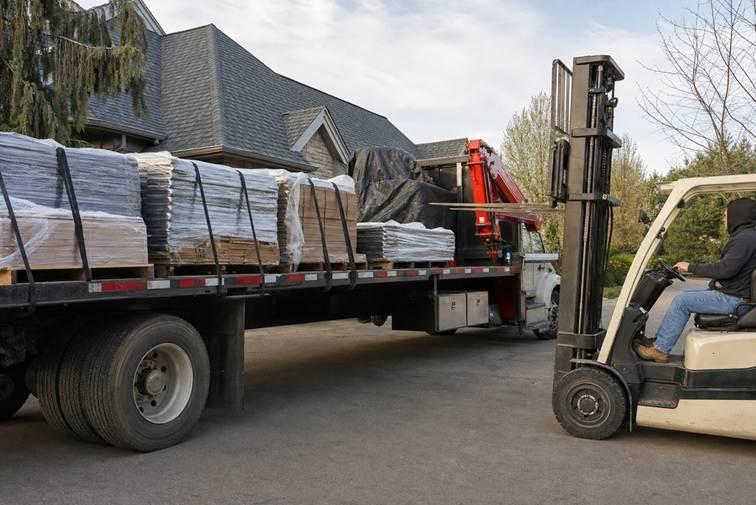
Finally, plan for your roofing materials to be delivered before your roofing crew shows up for installation. Talk through the logistics with the delivery service: Where can pallets of roofing materials be set without causing damage or impeding traffic? How will the materials be hauled into your home and onto the roof? Will landscaping or other areas be at risk for damage from the weight of the materials? Make sure you have a plan in place to avoid delays or other issues on roofing day!
Before the Materials Arrive
· Recheck your roof measurements
· Go over your flashing needs
· Don’t forget ventilation supplies!
· Determine where any extra materials can be stored out of the elements until you need them